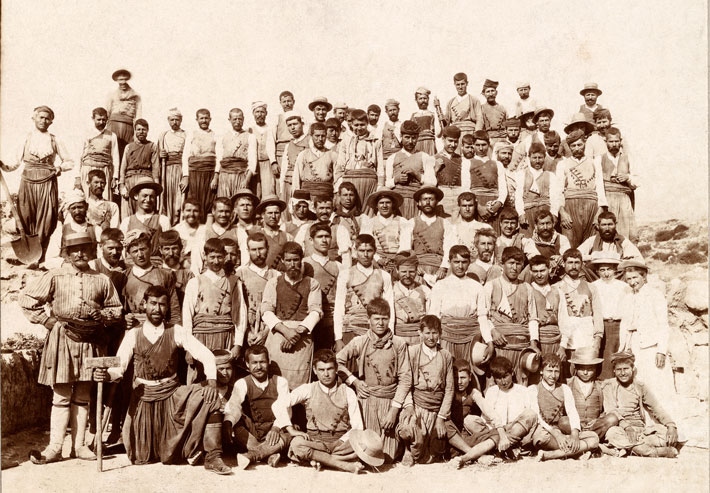
”I know a place where there are a lot of old things,” a peasant named George Perakis told the schoolmaster of the small village of Vasiliki, on the island of Crete, in the spring of 1901. Aware of a visiting American archaeologist’s anxious search to find a site of her own to excavate, the schoolmaster arranged for Perakis and his brother Nicholas to take Harriet Boyd and her colleague Blanche Wheeler to Gournia, four miles northwest of the village. Over several hours on May 19 Boyd collected a few potsherds and located the tops of several ancient walls, enough to convince her it was worth sending a team of workmen to the site the next morning. When she arrived at Gournia on the afternoon of the 20th, Boyd was astonished to see the men holding a bronze spear and sickle and numerous fragments of stone and pottery vessels, and clearing the threshold of a house and a well-paved road complete with a clay gutter. […]
Click here to continue reading!
Discover more from Minoan Magissa
Subscribe to get the latest posts sent to your email.
 Minoan Magissa