A few weeks ago I was on Crete, having coffee with an archaeologist friend. She happened to mention something strange. Crete has always been a seismic zone, with lots of earthquakes, yet remarkably, in Minoan times, no one was killed in collapsing buildings; they were never taken by surprise. We pondered this – it seems […]
Snake Priestesses of Crete as Earthquake Oracles? by Laura Shannon
Minoan Society
The Goings-On of the Ancient Cretans by Eleanor Kuhns

Loving these insights into the Minoan culture, Eleanor!
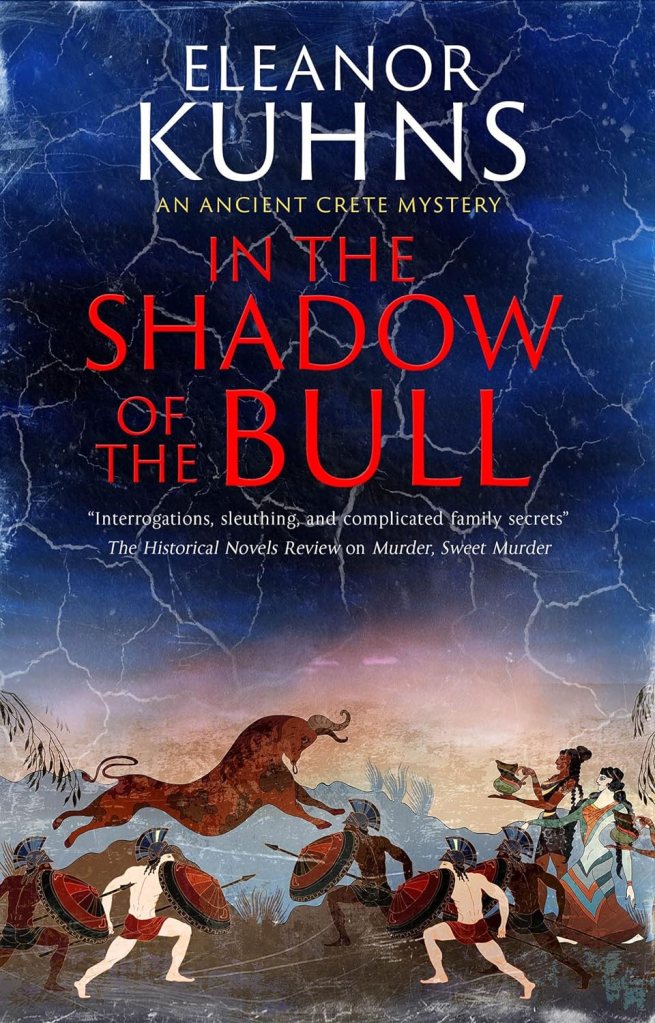
Speaking of which, I’ve been reading Eleanor’s Ancient Cretan mystery novel In the Shadow of the Bull, and the details are incredible. What an immersive experience it has been! As I get towards the end, I’m already excited about (and honestly can’t wait for) book 2. I’ll definitely post a book review in the future. 😀
Minoan Civilization: Egalitarian or Matriarchal?
The Land of Kings and Goddesses
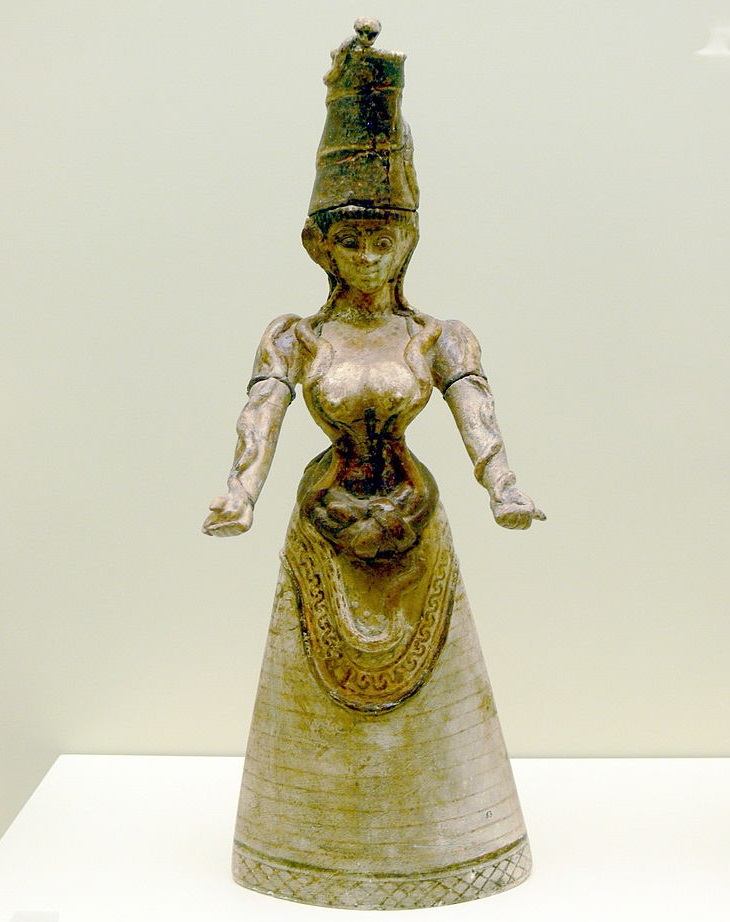
The patriarchy has been rooted in our reality for what seems to be eons, but the Minoan’s way of experiencing the world was not through such a lens. Their royalty may have consisted of kings, but the religious side of things consisted predominately of goddesses and priestesses. Men ran multiple facets of their society, but so did women. And when men were typically off at sea, women more or less took over in several arenas, including politics. Women and men alike also partook in various sports, including bull-leaping.
Gender Equality with Matriarchal Leanings
For a long time, archaeologists and historians have suspected a full-fledged Minoan matriarchy, especially due to the the prevalence of women in leadership roles. However, it seems more accurate to call this civilization egalitarian with matriarchal tendencies. It’s also important to note that their iconography contains no distinct depictions of kings. In fact, King Minos’ reign could very well be solely mythical….

Distinct Gender Roles with Some Gray Areas
Egalitarian but not perfectly so, Minoan society was still distinctly gendered as seen in illustrations, fashion, and certain societal duties. For instance, in family documentation written in Linear B, spouses and children weren’t listed altogether. In one section, it was solely fathers and their sons, whereas in another section, mothers were listed with only their daughters. That being said, there was an evident gender divide.
At the same time, on the Agia Triadha sarcophagus (shown above), there is a priest AND priestesses making offerings. Just like in Ancient Egypt, the Minoans color-coded their genders (lighter skin for women, darker skin for men). So, that person with darker skin playing the lyre (who has often been mistaken for a woman) is in fact a man. It is posited that priests wore women’s vestments during rituals to honor the goddess.
Conclusion
The verdict is there’s no set-in-stone answer and as with most things, it’s not so black and white. But one thing is for sure: Minoan society was not patriarchal. Also, while I did discuss usually clear gender roles and women in leadership, the matriarchal nature of the society doesn’t make it such via the domination by women alone; it has to do with its connection to nature and emphasis on creation (in a creative sense, not just a maternal one), among other things.
And I’ll wrap up this post with a quote by a Classics Professor at The University of Kansas:
“Basically, this culture on Crete around 1600-1500 BCE is the closest candidate for a matriarchy that we have.”
-John Younger
Sources
National Library of Medicine: The Woman in Minoic Crete
New World Encyclopedia: Aegean Civilizations
Kansas University: Religious Artifacts Support Idea of Minoan Matriarchy on Ancient Crete
*Featured Photo Credit: Agia Triada sarcophagus (long side) from Wikimedia Commons User Zde
 Minoan Magissa