Ο πιο δυνατός και γρήγορος ταύρος δεν με τρομάζει αλλά κρατώ την πνοή μου όταν αυτός κοιτάζει.
Περνά συχνά να με βλέπει στην ταυροκαθάψια. Το ενδιαφέρον του παίζει πολύ σημασία!
《Αγρίμι》 με φωνάζουν όλοι στο ντουνιά. Λένε 《άφησε τούτο το σκοπό για να βρείς άντρα!》
Αλλά εγώ πιστεύω στο βάθος της καρδιάς μου, θα βρω αγάπη χωρίς να σβήσω τα όνειρα μου.
English Transliteration
O pio dynatós kai grígoros távros den me tromázei allá krató tin pnoí mou ótan aftós koitázei.
Perná sychná na me vlépei stin tavrokathápsia. To endiaféron tou paízei polý simasía!
《Agrími》 me fonázoun óloi sto ntouniá. Léne 《áfise toúto to skopó gia na vreís ántra!》
Allá egó pistévo sto váthos tis kardiás mou, tha vro agápi chorís na svíso ta óneira mou.
English Translation
The strongest, swiftest bull doesn’t scare me, but I hold my breath when he looks at me.
He comes by often to watch me bull-leap. His interest makes my heart skip a beat.
“Wild one,” most of the villagefolk call me. They say, “Quit this gig so you can marry!”
But I believe, deep in my heart of hearts, I’ll find love without snuffing out my spark.
Note: This Cretan folk poem is about a Minoan bull-leaper who is seemingly fearless when it comes to bulls charging at her, but gets nervous the moment a romantic prospect looks her way. While Minoan society had egalitarian aspects (the fact that both men and women could be bull-leapers, for instance), there were still patriarchal elements and young women were expected to get married and start a family, as well as take on the family business. This starry-eyed bull-leaperess, however, plans on having both her love of bull-leaping and the love of her life someday. She refuses to give up one for the other!
From a blue that rivaled sky and sea to a purple befitting of royalty, the world of the Minoans was undeniably vibrant. The most prominent hues used in their frescoes in particular included black, white, red, yellow, blue, and green. Pink was the one color that was virtually nonexistent in their art, clothing, and makeup. But where did such striking shades come from? They were all naturally sourced, but the origins of specific colors like purple might surprise you…
Black
In order for the Minoans to create a black pigment as deep as the midnight sky, shale was primarily broken up into a fine dust, then mixed with a binder like olive oil or animal fat. Shale is a fine-grained, clastic sedimentary rock that’s formed from mud. There were and still are plenty of shale formations all across the island, so this color was readily available. Additionally, the oxidation of other minerals like azurite could have very well been used in place of shale. When it came to eye and eyebrow makeup, kohl (a powder made from crushed minerals like lead sulfide or charcoal) was used by Minoan women and men alike.
a piece of shale
White
Stark white was sourced from slaked lime. Also known as calcium hydroxide, slaked lime is a pale powdery substance formed when quicklime (calcium oxide) is mixed with water. In addition, talc and calcium silicate were used to paint pottery.
some slaked lime
Red
More of a reddish-brown, hematite (iron oxide – rust) was the most common source for red, as well as red ochre. When it came to coloring fabrics, dye was extracted from the madder plant’s (Rubia tinctorum) roots.
a piece of red ochre
Yellow
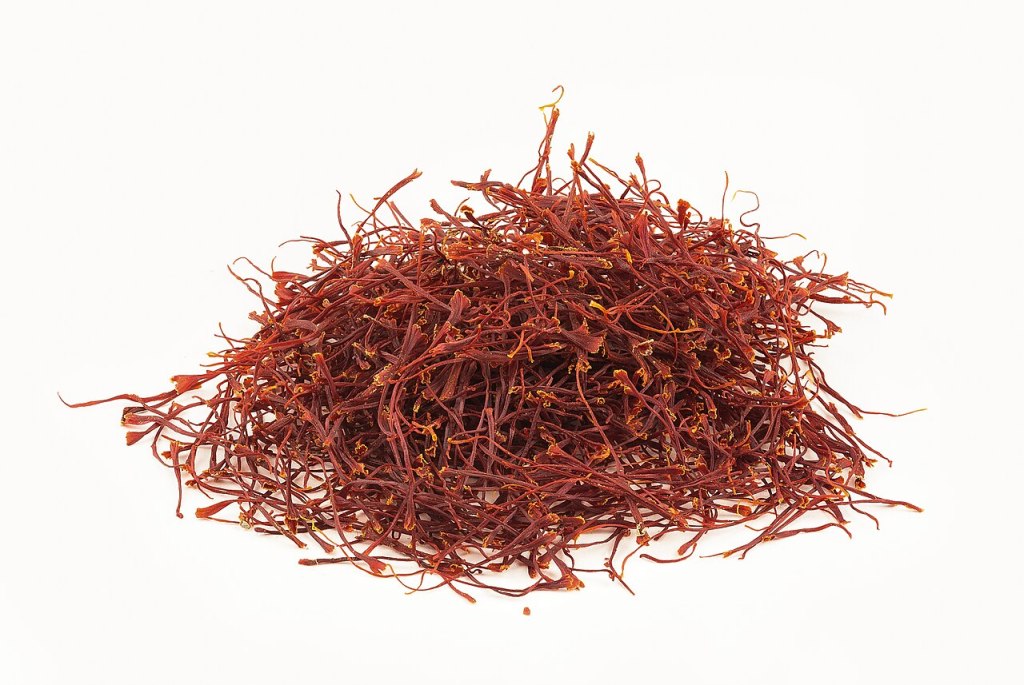
A naturally-occurring earth pigment, their lively yellow hue featured in frescoes and textiles alike was made from yellow ochre. A more golden variation that happened to be highly UV-resistant was a plant dye derived from weld (Reseda luteola). The most vibrant yellow tint of them all was made by crushing saffron. The stigmas from the crocus flower, saffron was more so used for its medicinal and ritualistic properties by midwives and healers. Mineral pigments like realgar and orpiment produced a more yellowish-orange color.
a handful of saffron
Blue
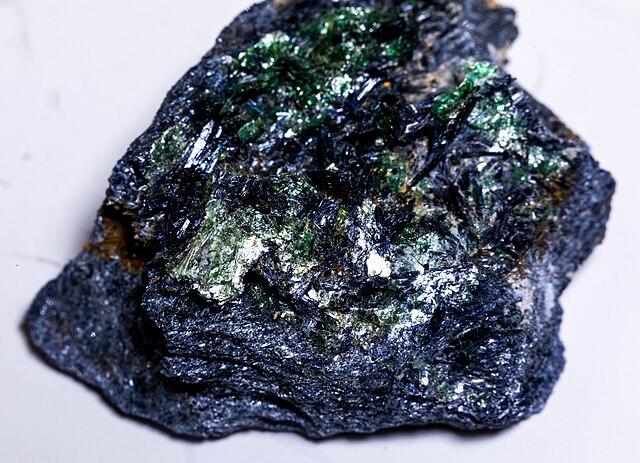
Blue, Egyptian blue in particular, was more of a synthetic pigment made by combining ground-up silica, lime, copper, and alkali and then firing it. A natural blue mineral from a metavolcanic rock called glaucophane (or blueschist) was also utilized. The bright blue gemstone lapis lazuli was another viable option.
glaucophane
Green
To produce green, the Minoans simply combined yellow and blue in varying amounts to create a wide spectrum of green tints.
Purple
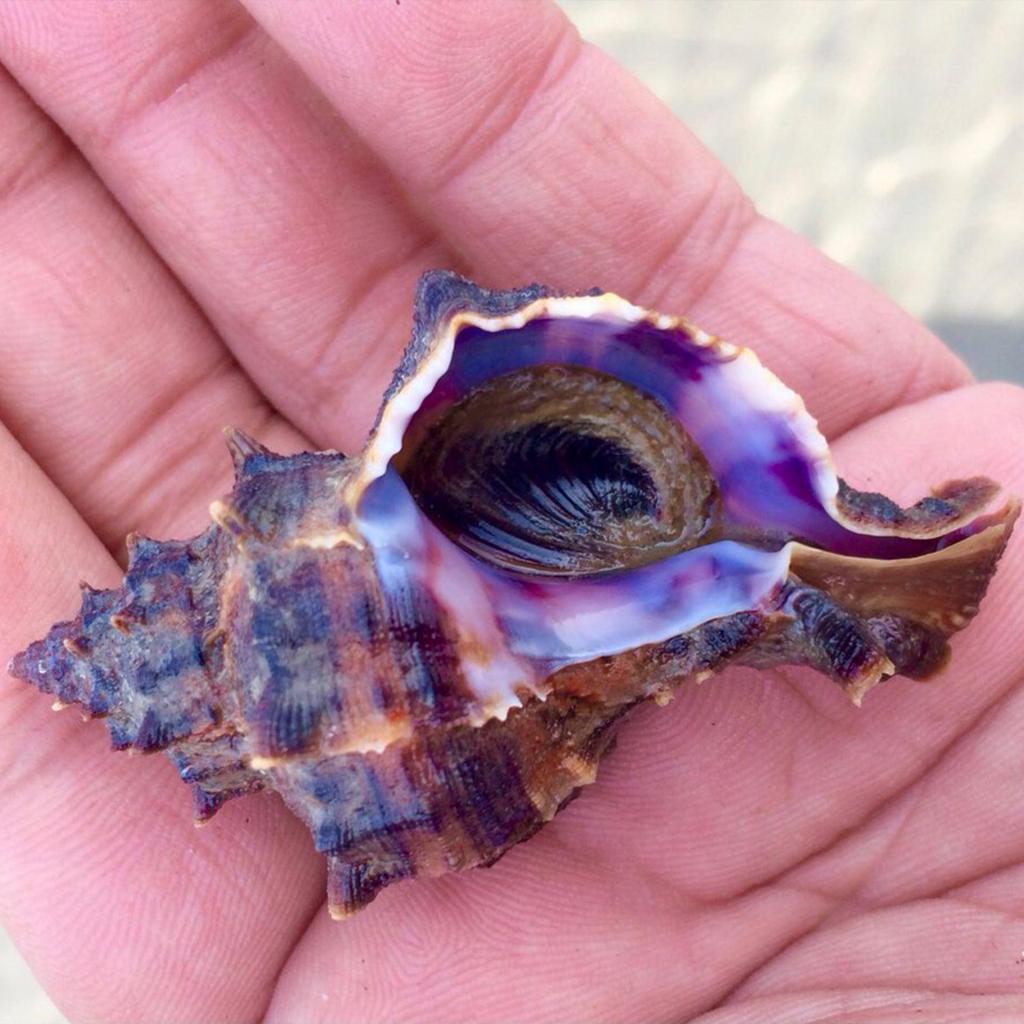
Just as the other colors above, purple was indeed naturally-sourced. But it wasn’t from a mineral, plant, or stone. Instead, it was derived from the gland of a mollusk: the murex snail, which was and is still abundant along the Cretan coast. Unfortunately, these sea snails were usually crushed to extract their gland secretions. But what actually yielded the prized purple dye was when it was oxidized and heated. This color has always had an association with royalty, so it’s no surprise that it was a symbol of prestige to Minoans. Archaeological evidence (namely a dye installation on Pefka) suggests that the Minoans were producing Tyrian purple centuries before the Phoenicians. While the snails could be kept alive for multiple dye extractions, they were often killed. This pigment could be modified to also produce a redder shade. Clearly, prestige came at a price, but that didn’t stop the Minoans!
Η χέρα μου βαμμένη βαθυκίτρινη σαν ήλιο. Χρυσοχέρα με φωνάζουν στην Θήρα και στην Κνωσό.
Τα μαλλιά μου πάντα θα μοσχοβολάνε σαν τη γη. Θα μαζεύω σαφράν μέχρι την τελική μου πνοή.
Transliteration:
I héra mou vamméni vathykítrini san ílio. Hrysohéra me fonázoun stin Thíra kai stin Knosó.
Ta malliá mou pánta tha moschovoláne san ti gi. Tha mazévo safrán méhri tin telikí mou pnoí.
English Translation:
Μy hand, like the sun, is tinted yellow. Golden-handed they call me in Knosso.
My tresses will always smell like the earth. I’ll gather saffron ’til, with it, I merge.
Note: This Cretan folk poem is inspired by Minoan saffron gatherer frescoes. I’d imagine something as time-consuming as saffron gathering would make it so a saffron gatherer’s fingers were continually tinted deep yellow. There is a level of precision and dexterity that is necessary due to the dainty and valuable nature of crocus stigmas, so I’d also like to think these gatherers were determined and patient people. Also, “χρυσοχέρα: hrysohéra” (golden-handed) is a common descriptor used amongst Greeks for someone who is good with their hands.



 Minoan Magissa