
Dressing like a Minoan during modern times would certainly turn some heads and even get you some strange looks. Bare-chested bodices and long, vibrant flounced skirts… It’s also no longer practical in this day and age, especially if you live in a colder climate. So, the next best thing is to search for lovers of ancient art who integrate it into their creations! From earrings to sweaters inspired by timeless frescoes, there’s a way to carry Minoan art with you into your everyday life without intricate hairstyles and waist-slimming belts that restrict breathing (and how much you can eat 😆).
Wearable Art with Ancient Flair
First, I’d like to share photos of a sweater inspired by the Minoan Dolphin Fresco, featuring both the iconic blue dolphins, blue fish, and rosettes 🐬. I initially came across it here on WordPress when looking under the “Minoan Art” tag and did a little happy dance in my computer chair. Greek Myth Comics is full of comics about Greek mythology, but they also host podcasts and create wearable art! I purchased the sweater you see below here. There are other options as well (from labrys totes to griffin cardigans).

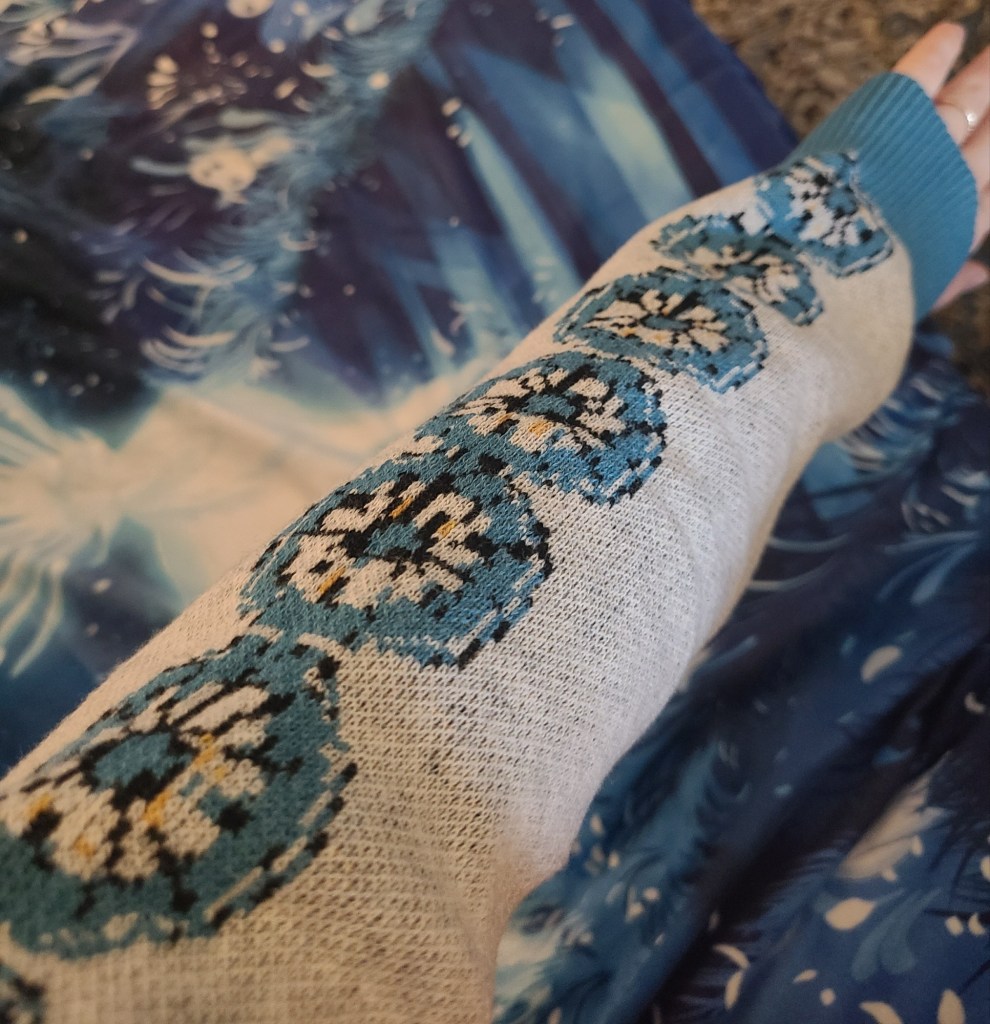
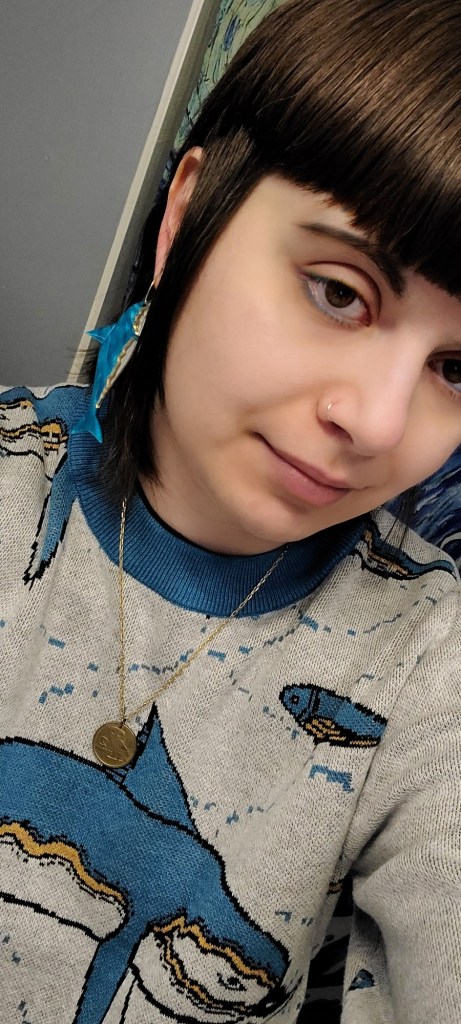
The quality is amazing, the material is comfortable, and the fit is slightly on the larger side, so size down if you’re looking for a snugger fit. By the way, I have not been sponsored in any way. I’m just geeking out and wanted to share in my excitement 😁. You’ll also notice I’m wearing a dolphin earring, so next up is the jewelry!
The dolphin and rosette earrings below were created by Plato’s Fire (Natasha is behind this endeavor, a Classics alumna and talented jewelry-maker based out of Scotland). Sadly, there aren’t as many pieces left from her Minoan collection, but there are still a few dolphin and rosette ones available!


As you can see, the craftsmanship is superb! They are lightweight and made of acrylic. The only issue I’ve had with the dolphin earrings is getting them on and taking them off… The hoop is a bit tricky for me, and my very sensitive ears don’t react too well to the metal if I wear them for long periods of time. But they’re quite versatile, so I wear one of them as a pendant at times or dangle them from the cloth on my altar. Needless to say, these items definitely make a statement!
That’s a wrap! Now all I need to do is go to Knossos again while wearing my Minoan items (not in the heart of summer like last time… let’s just say sunny 100-degree weather is not ideal for checking out ancient sites 😅) and take a photo in front of the Dolphin Fresco. In all seriousness, that would be amazing (and amazingly geeky, but I put the “geek” in Greek so… 😂).
If you’d like to see other Minoan-inspired pieces, go here. I didn’t get to the symbolism of the dolphin and rosette imagery in Minoan art, but that’s because I’d like to devote posts to each symbol at some point, so stay tuned for those. 😊



 Minoan Magissa