The Many Names of Crete Through the Ages: From Kaptara to Krētē

Before Crete (Κρήτη: Krētē) was, in fact, called Crete, it was referred to as Kaptara (its earliest known reference, c. 1800 BCE) in Syrian and Neo-Assyrian, Keftiu (Kftı͗w, c. 1480 BCE) in Ancient Egyptian, and Caphtor in the Bible.

An old map of Achaean Crete in color

Many scholars deem Keftiu to be more similar to the Minoan name than “Minoan” ever was, which may be derived from the Greek word for “the nail of the earth” or “the peak of the mountain”. This phrase refers to the dominant peak of Crete (Mount Ida at 8,058 feet), which was a well-known landmark for seafarers. The Middle and Late Egyptian versions were as follows: Keft, Keftu, Kaftu, Kafta, Kefdet, Keftju.
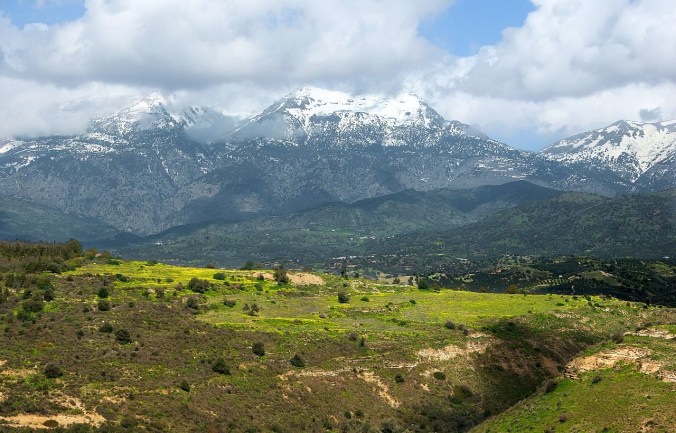
Mount Ida in Rethymno, Crete
Mount Ida. Credit: Jebulon

However, it is important to note there’s been much debate over what Keftiu is truly referring to. While some scholars say Cyprus or Syria, the stone base of a statue during Amenhotep III’s reign states otherwise. Kftı͗w is in a list of Mediterranean ship stops to Cretan cities like Kydonia and Phaistos, which clearly points to the Aegean, not Anatolia.

Its initial Crete-adjacent iteration was found in Mycenaean Greek texts dating back to around 1,500 BCE. In Linear B, it was written as 𐀐𐀩𐀳 (ke-re-te) at first. Later on, it took on the names 𐀐𐀩𐀯𐀍 (ke-re-si-jo), Κρῆτες (Krētes), and Κρήσιος (Krēsios).

In Ancient Greek, Crete’s current name (Κρέτα (Kréta) to the ancient Doric Greeks) first appeared in The Odyssey. While its etymology isn’t entirely certain, there are two main propositions. The less likely notion between the two is that Crete could stem from a hypothetical Anatolian Luwian word kursatta (kursawar: island). However, there’s more of a consensus surrounding its Ancient Greek origins. Crete could very well stem from “κραταιή” (krataie̅), which means strong or stronghold, reflecting the fact that the island was the strongest thalassocracy (maritime empire) in the ancient world.

Interestingly, κριτικός (krētēkos), which is a homonym of Κρητικός (what you call a Cretan man), means “able to discern or be critical.” Though this is simply something I personally noticed, this could relay to their command over both rugged terrain and tumultuous sea, and the critical thinking involved in traversing both.
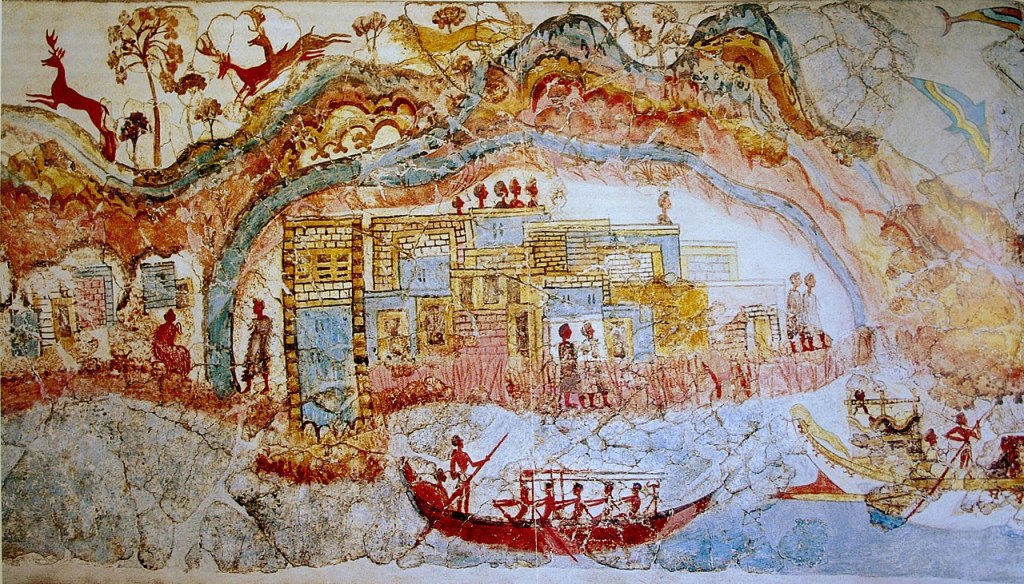
The Ship Procession or the Flotilla frieze

Another near-homonym could just be another interesting coincidence, but when it comes to Caphtor, that is very similar to the word for “hot” in Greek (kaftó: καυτό). Crete has a temperate Mediterranean climate, which means summers are hot and dry. I can even attest to the intense heat having stayed at my γιαγιά’s non-airconditioned house during many a summer.

I’d definitely take the above thoughts with a grain of salt because the closest Greek word to Keftiu is keftés (κεφτές), which means “meatball”. While κεφτέδες are a Greek delicacy, the two words are clearly not related. It’s just interesting to me that some foreign names for Crete actually hold relevant meanings.

From Kaptara to Krētē, the ‘k’ sound has (mostly) remained since its very first known iteration. However, what has been mentioned isn’t all-inclusive. In Latin, Crete is Creta, whereas the original Arabic name was Iqrīṭiš (اقريطش) and then changed to Χάνδαξ (Chandax).

Candia, derived from the French Candie, was used in Latin, Italian, and Venetian. In Ottoman Turkish under Ottoman rule, Crete was called Girit (كريد: precious stone), which brings up another uncanny coincidence. My μαμά’s Cretan maiden name means precious stone, which I won’t mention here for privacy reasons. The “-akis” suffix was added later on, which means “small”, changing the name meaning to pebble. While that’s a point of pride during modern times, that was added to Cretan surnames during the Turkish occupation to demean Cretans.

  • Caphtor/Keftiu: A New Investigation by John Strange
  • The Aegean Bronze Age by Oliver Dickinson

Minos Kalokairinos: The Original Excavator of Knossos

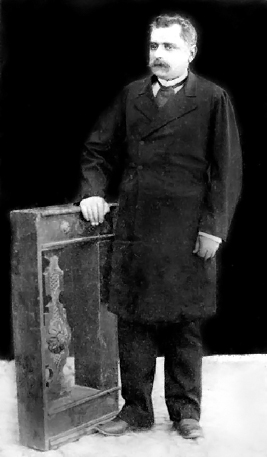
Arthur Evans tends to be the first name that comes to mind when one thinks of Knossos and its initial discovery and excavation. However, the original excavator is less widely known. His name? Minos Kalokairinos (yes, Minos!), a so-called novice archeologist, businessman, lifelong student, and antiquarian. That being said, the first excavation of this ancient Cretan site took place in 1878, not 1900 (by a Cretan person no less).

a photo of stairs leading into a chamber with pillars at Knossos

Minos Kalokairinos, The Palace of Minos: Mere Coincidence or Fate?

Not to get too poetic about it, but I do find it interesting that Minos shares the name of the legendary king Minos, which the Minoan civilization was named after (by Evans). Also, he was the first person to pin down the location of the Minoan ruler’s palace (also known as the Knossian Labyrinth). It’s far too synchronistic, if you ask me…

a photo of Minos next to an artifact

The Life of Minos Kalokairinos (Μίνως Καλοκαιρινός)

Born back in 1843 on the island of Crete in Heraklion, Minos was the son of an affluent landowner named Andreas Kalokairinos (he actually owned the Knossos site). Following in father’s footsteps, his life was a balancing act between entrepreneur and scholar.

Academic Pursuits

Minos pursued his secondary education at Syrus, followed by a law degree at the University of Athens, which was short-lived. A year into the program, his father passed away from a serious illness. From there, he and his brother Lysimachus took over the family business until 1871. Eventually, his unwavering entrepreneurial spirit led him to soap manufacturing at an award-winning level. Alas, that was also short-lived when he became bankrupt. Thankfully, he would later oscillate back to his scholarly endeavors to continue his studies, which would lead to a degree.

May the Excavations Begin!

During 1878, Minos embarked upon quite a feat: the initial Knossos excavations! However, he would only be entitled to a third of the findings because two other individuals already owned the site. This primary excavation spanned the course of nearly a month and comprised the Royal Palace complex, namely the west and south wings.

Another Roadblock

However, the political situation at hand at the time had other plans (Crete was under Turkish occupation). Less than a year later, Fotiadis Pasha (the Christian Commander of Crete) visited the site to check on their progress. Unfortunately, he and the city’s scholars came to a unanimous decision to halt the excavations right then and there, in the name of protecting the findings.

Shaken But Tenacious

Even still, Minos was deeply passionate about this ancient palace and dreamed of making Knossos the talk of the world. So, he discretely escorted various archaeologists, diplomats, etc. at Knossos and showed off his private collection. By 1886, famous German archeologist Heinrich Schliemann (the one who discovered Troy) paid Minos and the site a visit. That alone could have changed everything, but continued excavations were still forbidden.

The Second Excavator Takes Over as The First Bows Out

A pivotal moment came in 1894, when Sir Arthur Evans arrived to survey the site for himself. Immediately in awe, he purchased a fourth of Kephala Hill. Six years later, the excavations officially started back up again. The exact date? March 23rd 1900, the date most are familiar with and reference when it comes to the “first” Knossian excavation.

The Throne Room was first in line, and in two years’ time, the entirety of Knossos was dug out of the pervasive ash. This was certainly a groundbreaking time, but alas, Minos retired due to tragedies that befell him and his loved ones. Long story short, a vast genocide of civilians by the Turks in 1898 took the life of his beloved brother Lysimachus and son. His niece also went missing. And if that wasn’t horrific enough, his home was set ablaze, his precious collection of artifacts and all.

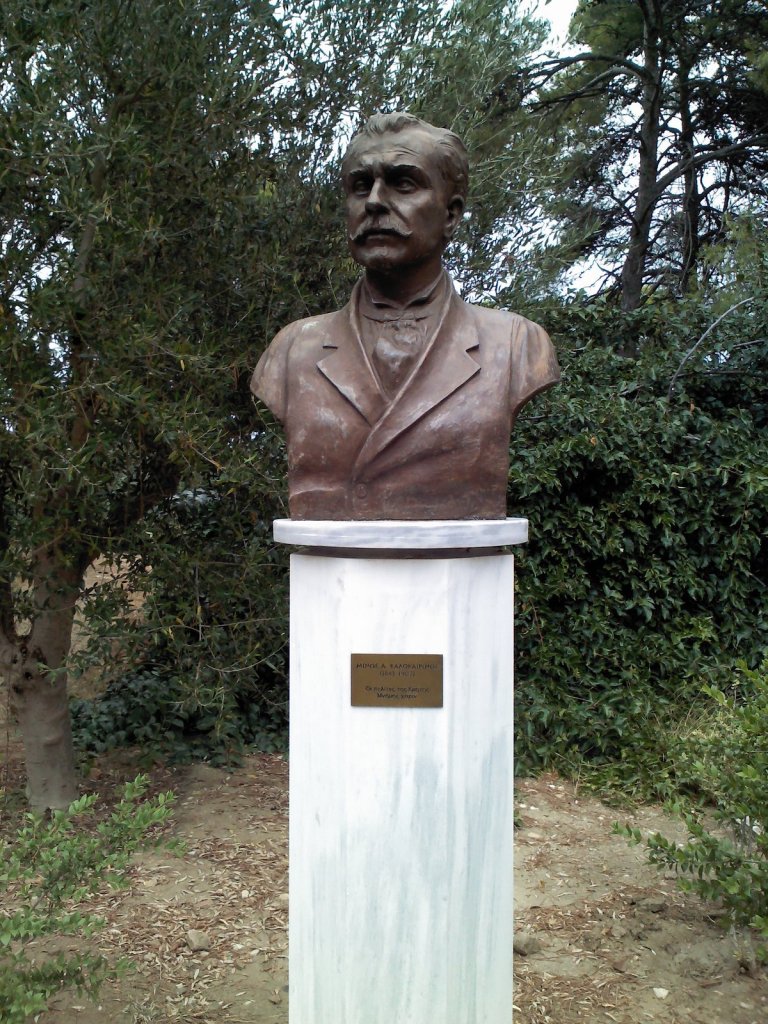
a statue of Minos at Knossos

Minos’ Legacy Lives On

However, all hope was not lost. In 1903, Minos’ nephew built a new mansion. To this day, this mansion is home to the Historical Museum of Heraklion. And prior to Minos’ passing in 1907 (on an island no longer under the Ottoman Empire’s rule), he had the opportunity to publish a journal primarily dedicated to Knossos called the “Cretan Archaeological Ephemeris”.

And while that house fire destroyed many of his findings, Minos fortunately had quite an extensive assemblage of artifacts. The amphorae found in Knossos’ western wing were donated to Greek museums and beyond to garner global intrigue.

It is Μίνως Καλοκαιρινός’ initial explorations and discoveries that led to those major excavations that revealed an expansive and elaborate palace of ancient times to the world. That is a fact that should never be overlooked! He may have not had to opportunity to see things through until the end, but his contribution to Crete’s rich history will have an enduring ripple effect.

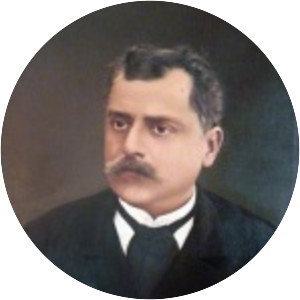
a headshot of Minos
a headshot of Minos

Kotsonas, A. (2016). GREEK AND ROMAN KNOSSOS: THE PIONEERING INVESTIGATIONS OF MINOS KALOKAIRINOS. The Annual of the British School at Athens,111, 299-324
Municipality of Heraklion: Knossos
Μίνωας Καλοκαιρινός: Ο άνθρωπος που οδήγησε τα βήματα του Έβανς