Communing with My Ancestors at Knossos (a poem with photos)

a piece about my unforgettable visit to the Palace of Knossos that connected me to my ancestors in a way nothing else has…
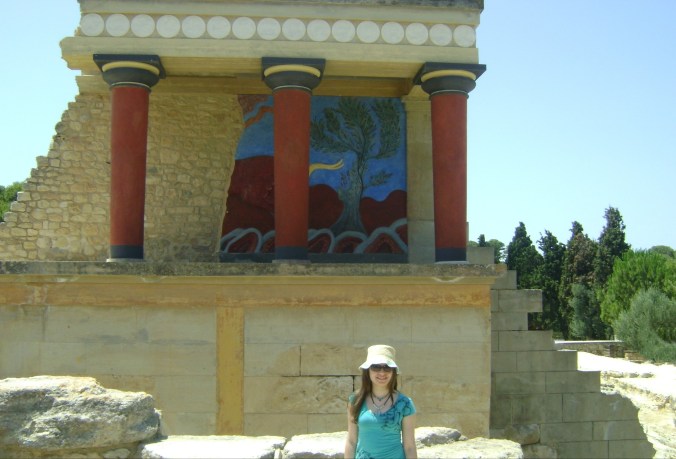
Me by the Restored North Entrance with the Charging Bull fresco
me by the Restored North Entrance with the Charging Bull Fresco

Mid-July sun scalds skin and ancient sites indiscriminately
and illuminates the same steps my ancestors took thousands of years ago.
The trickles of sweat down my brow are overshadowed by
the tingle up and down my spine as I approach
pithoi1 that once contained oil from olive trees that may still live to this day,2
vibrant frescoes that still echo the artistry of masterful Minoans
despite destruction by both nature’s and occupiers’ hands
and some questionable reconstructions,
labyrinthine paths that, along with midday heat, further dizzy me.

Knossos stonework, paths, and stairs
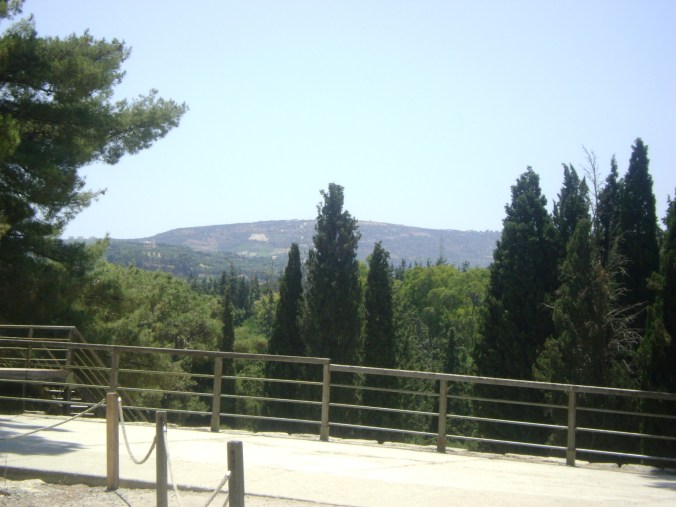
the view from Knossos

Mouth dry but mind bedazzled by
Mount Juktas (Γιούχτας)3 nearby
and Kephala Hill (Κεφάλα)
upon which Knossos (Κνωσσός) was built
that have seen it all since the dawn of their time,
stone pines and cypress that envelop the sacred ruins
and perfume the air with an earthy resinous aroma
that graced festivals and rituals millennia ago.

The view from Knossos
Knossos souvenir shop

Finding solace in the shade of a souvenir shop
with the words “Knossos Antiquities” on the side
and shrubbery along the top,
I immediately decide on a golden figurine
of the Snake Goddess with an owl atop her head,
not a cat that Arthur Evans and Halvor Bagge proposed
and transposed upon her crown.
As the sun shines just right,
I then catch a glimpse of a mini Lily Prince
with a similar golden finish
and know then and there: I just have to have it!
Having promised my friends overseas
that I’d send them post cards,
I also select several that show Knossos
in its most magnificent light.

Snake Goddess and Lily Prince figurines from a Knossos souvenir shop
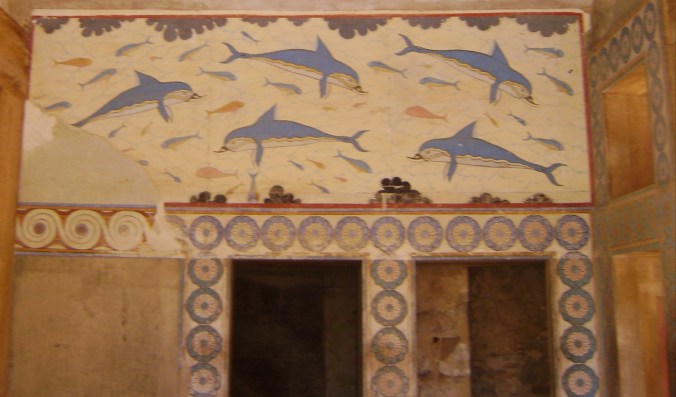
The Dolphin Fresco

Upon returning to grandma’s (γιαγιά) house,
and after being well-fed, of course,
a satisfying exhaustion takes over my body
and I fall into a deep sleep,
charging bulls, dolphins, and griffins infiltrating my dreams.
The Lily Priest-King and The Snake Goddess themselves
observe me from afar with knowing smiles but grave eyes
as it starts raining rosettes.
A sudden tidal wave hits the Palace,
and a chilling darkness overcomes me.
I wake in a cold sweat in the same blackness
and fear I haven’t awakened at all4

《Κόπηκε το ρεύμα,5》my γιαγιά blurts out.

***

I may have left, but the magic of Knossos
will never leave my heart and psyche,
even if I never set foot there ever again
6.


*More photos from my trip can be viewed here.
Please pardon the blurriness in some – these were all taken with a relatively cheap digital camera back in 2011…

Rosette divider
  1. ancient storage vessels ↩︎
  2. Gra Elia, while not at Knossos, is an ancient olive tree nearby that’s situated in the village of Vorizia, Heraklion. ↩︎
  3. a mountain located several kilometers away from Knossos that was a significant religious site for the Minoans ↩︎
  4. This actually happened! I sincerely thought I died. ↩︎
  5. “The power went out.” ↩︎
  6. I dream of being healed enough from generational trauma that I can return to my homeland someday. ↩︎
The Wildlife of Ancient Crete: Cretan Goat/Agrimi (Capra hircus cretica) 🐐

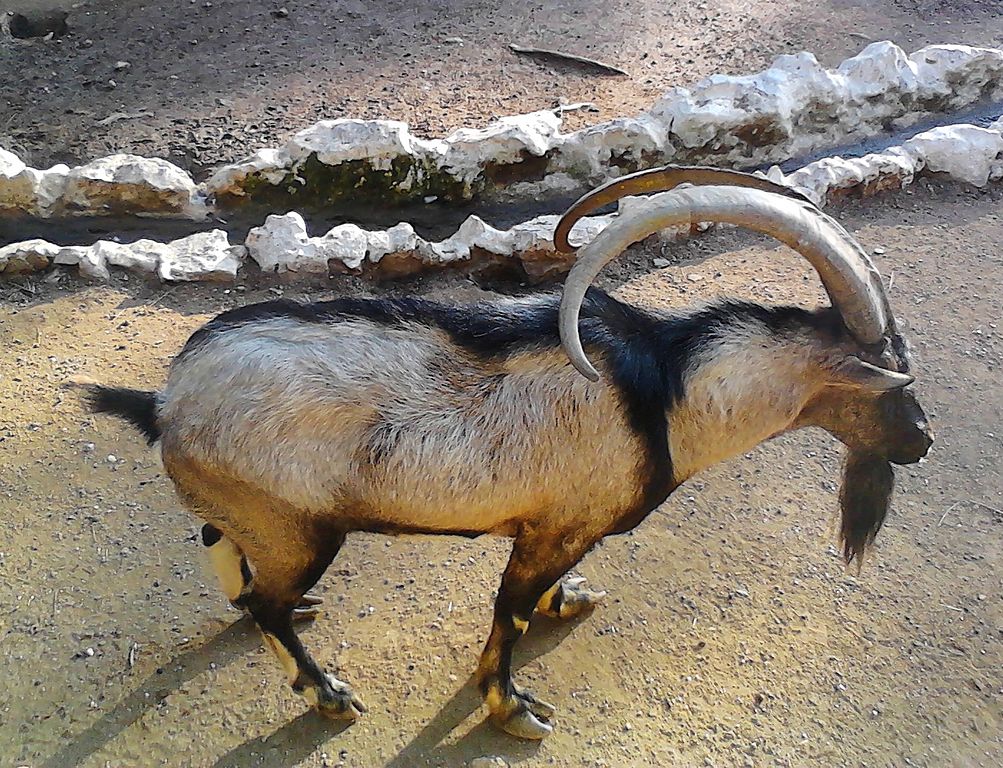
The Cretan goat (or kri-kri) is a creature of Minoan times that is still in existence to this day. It’s considered a feral goat endemic to Crete that also happens to be the island’s main symbol. This particular goat is commonly referred to as an agrmi (αγρίμι: “the wild one”, wild beast” or “full of fury”) amongst Cretans. Its female counterpart is called a sanada (σανάδα).

Credit: Ανώνυμος Βικιπαιδιστής

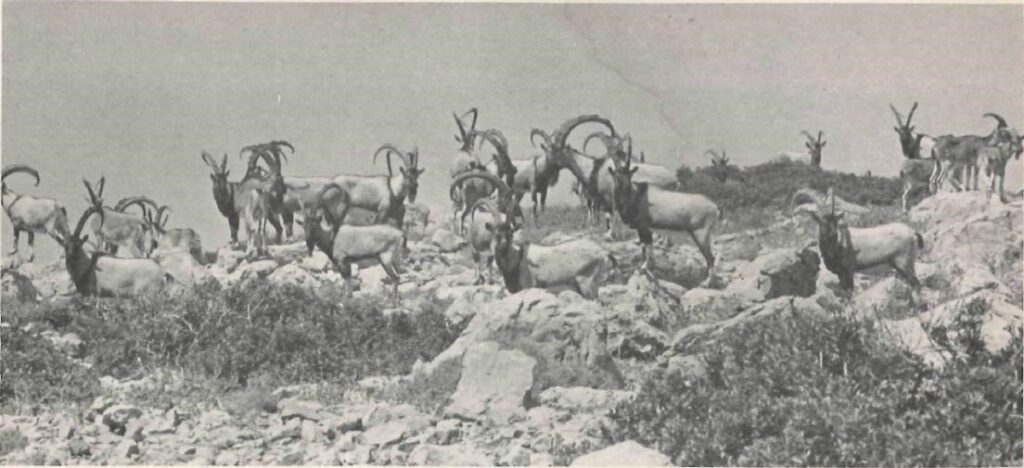
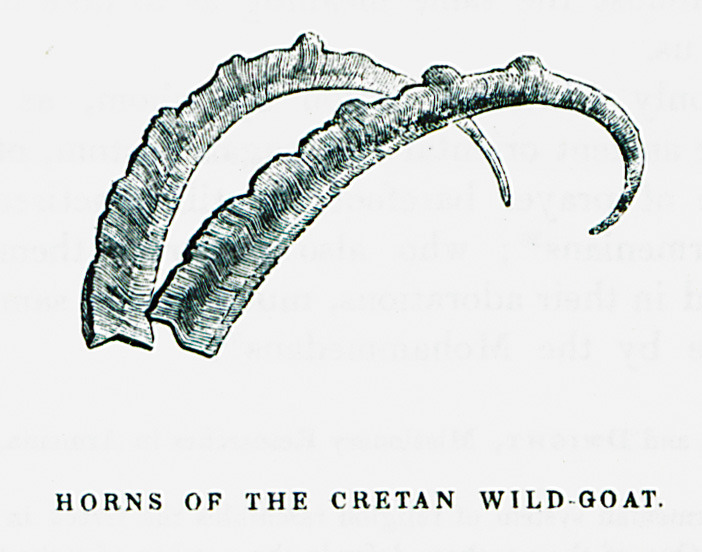
The kri-kri’s coat is coarse and light brown, with a black band around the neck on males. Moreover, it’s a double coat, consisting of an outer layer of longer, coarser hair (guard hair) and a soft undercoat (underwool). Their two horns that curve back are noticeably longer on agrimia than sanades. As for their extra-long hooves, they are cloven, which means that they’re split into two main hooves that work independently of one another. It also has two dewclaw hooves higher up its pastern (ankle), which are ideal for climbing cliffs and landing their large leaps without falling.

Out in the wild, the Cretan goat possesses a timid demeanor and avoids humans whenever possible but when cornered or taunted, they may respond by lowering their heads, pulling in their chins, and showing their horns.

Credit: Robert Pashley

The agrimi was most likely imported to the island during the Minoan period. Molecular analyses also demonstrate that this goat is not considered a distinct subspecies of wild goat as formerly posited. It is, in fact, a feral-domestic goat obtained from the initial stocks of goats domesticated in the Levant and various parts of the Eastern Mediterranean in approximately 8,000 BCE.

Credit: Marco Masseti

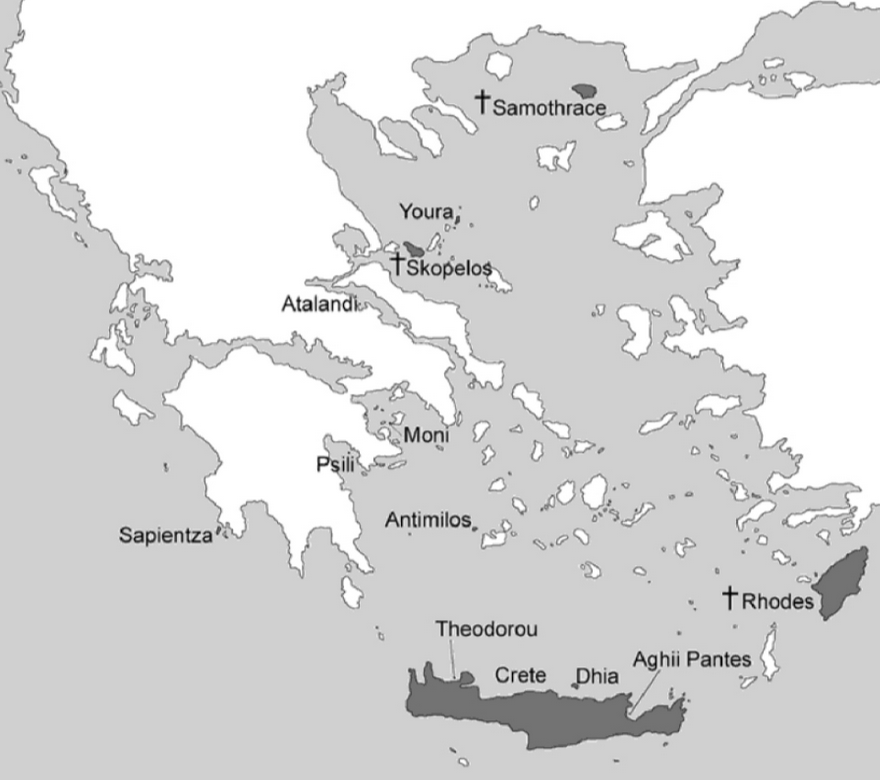
Capra hircus cretica was once common throughout the Aegean but the peaks of the White Mountains of Western Crete are presently where its most prevalent. This area hosts over a dozen endemic species and is protected by UNESCO’s (United Nations Educational, Scientific and Cultural Organization) Biosphere Reserve in Samaria Gorge. Agrimia also extend into the Samaria National Forest and the isles of Dia, Thodorou, and Agioi Pandes. To grow their numbers, they’ve recently been introduced onto two additional islands.

Despite all these efforts, the kri-kri is deemed “Near Threatened” globally by the IUCN (International Union for Conservation of Nature) as of 2025 due to habitat loss, hybridization with domestic goats, and poaching.

Back in 1960, this emblematic animal was at its most threatened, with a population just over 100. The main reason for this is that it had been the only meat source available to freedom fighters during World War II’s German occupation. Thankfully, Samaria Gorge became a national park two years later!

Not only is the kri-kri a primary symbol to modern-day Cretans, but it was also sacred in antiquity. Many depictions have been found by archaeologists in Minoan art, including the Minoan rhyton (drinking vessel) pictured above. This has caused some academics to surmise that the Cretan goat was worshiped and had ties to the Greek god Pan, the half-goat deity who presided over the wild, shepherds, and flocks.

Today, the agrimi represents the free spirit, grit, and determination of the Cretan people. It also embodies the island’s rugged landscape and the perseverance necessary to traverse it. I didn’t understand the reference at the time, but I’d be compared to an agrimi as a kid when I’d be outside playing with my friends all day long, paying no mind to skinned knees, sweaty clothes, and dirt on my hands and legs. “The Wild One”… Quite fitting indeed.

  • Bar-Gal, G. K. et al.: Genetic evidence for the origin of the agrimi goat (Capra aegagrus cretica). Journal of Zoology.
  • Breed Profile: Kri-Kri Goat by Tamsin Cooper
  • Manceau, V. et al.: Systematics of the genus Capra inferred from mitochondrial DNA sequence data. Molecular Phylogenetics and Evolution.
  • Minoan Zoomorphic Culture by Emily S.K. Anderson

Crete: The Cradle of Minoan Culture by Len Kagami

This article is very detailed and full of stunning photos. I highly recommend reading it and following Len’s blog! 🙂