Minoan Symbols: Bees & Honey 𓆤

Beekeeping equipment, beehive fragments, and depictions of beehives that date all the way back to 1,700 BCE are amongst various archaeological findings on the island of Crete and Thera. From The Malia Pendant that depicts two conjoined bees to remnants of honey offerings to their deities, bees (and the honey they produced) were integral symbols to the Minoans.
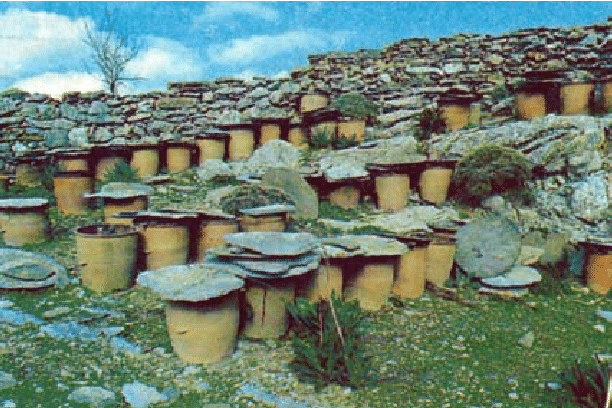
Abandoned apiary of vraski hives covered with stone slabs by K Savvakis

With how intrinsically connected the Minoans were to nature, it’s no surprise that bees and honeycombs were a recurrent motif in their frescoes, pottery, seals, and more.

While archeologist Dr. Georgios Mavrofridis and some of his colleagues posited that The Malia Pendant was modeled after the mammoth wasp (Megascolia maculate), The Malia Pendant (Χρυσό κόσμημα των Μαλίων) and “The Bees of Malia” are used interchangeably. At first glance, the impression that these may be wasps instead makes sense, if it wasn’t for the Minoan’s tendency to distort, and in most cases exaggerate, the forms of creatures and humans alike in their art. Realism just wasn’t of primary focus. This embellished art style was also evident in Egyptian art, which directly inspired them. For instance, the elongated thorax and abdomen bees were often depicted with at that time emphasized fertility. Furthermore, The Malia Pendant showcased the production cycle of honey, and thus, the inescapable cycle of life and death.

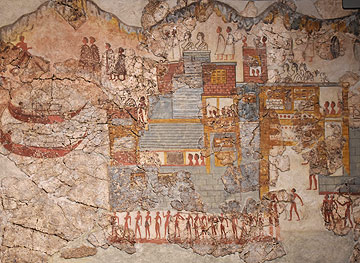
A potential apiary (a place where bees are kept) is depicted in the structure painted on the south wall of the Miniature Frieze from the West House at Akrotiri, Thera. Covering the slope of a hill, it comprises dual vertical blue bands on its western edge as well as four horizontal blue bands, five rows of black triangles with circular openings at their base alternating with the aforementioned bands. In addition to an apiary, this has been deemed a shipshed, storage area, and more.
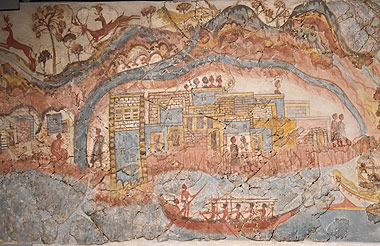
However, there are several uncanny details that lean towards the apiary interpretation. For instance, the triangular aspects likely depict the fixed-comb beehives that are still used in Greece to this day. Moreover, the path that goes from the apiary and joins the settlement with the three-part building at the hill’s zenith may signify organized beekeeping. The trapezoid-shaped expanse of blue to the east possibly portrays a pond (a water source being another vital aspect of beekeeping). While theoretical, researcher Irini Papageorgiou believes the scope of the area encompassed by the installation and the prominence of beekeeping products (indicated by both chemical analysis and Linear B tablets references) do, in fact, point to an apiary.
Honey was utilized in numerous areas of Minoan life, making it almost if not just as valuable as olive oil. With how ubiquitous of a commodity it was, this liquid gold had multifaceted symbolism to match.

Based on archive tablets found at Knossos, it was noted that honey offerings were made to the pre-Hellenic goddess based out of Crete, Eileithyia (goddess of childbirth and midwifery). More specifically, the kernos or offering table in the temple at Malia was used to offer grains and honey to her. In general, the regenerative aspects of bees were a key symbolic attribute of a Minoan goddess.

Birth of Athena from Zeus' head with the assistance of Eileithyia

Honeycomb imagery was also prevalent in various tombs, symbolizing the renewal to be found in the afterlife—renewal in the sense of change in form, not necessarily size (i.e. bees start as an egg, then larva, followed by pupa before fully grown).

Bees’ tendency to swarm and even dance in synchrony (and the fact that they congregate in hives) serves as a symbol of community and oneness.

And while more prominent in Ancient Greece, bees were generally regarded as divine messengers that imparted wisdom and eloquence to mortals when imbibed.

In addition to Minoan spirituality, honey was crucial to the Minoan economy and trade. Not only was it their primary source of sweetener, but it also provided them with a versatile food source with substantial nutritional value. Honey was a highly coveted additive of alcoholic beverages like mulled wine as well.
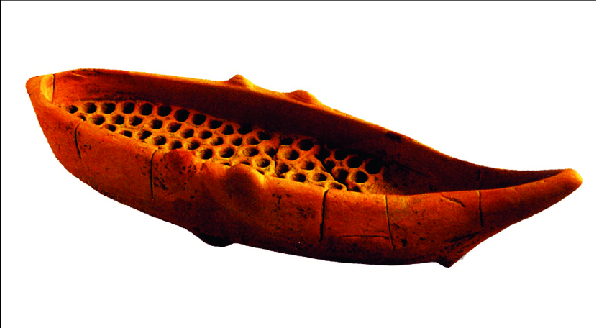
Minoan ceramic model of a boat transporting honey combs

Honey was used as a skincare product and ointment across multiple ancient civilizations throughout West Asia and the Mediterranean, especially during The Bronze Age. Honey, often mixed with olive oil, was and is still used to hydrate, soothe, and exfoliate skin, leading to a more youthful complexion. Due to its anti-inflammatory and antiseptic properties, honey was applied to wounds for enhanced healing and to prevent infections.

Needless to say, honey was an elixir of life and longevity to countless civilizations, including the Minoan civilization.

Flowers of Minoan Crete: Saffron Crocus (Crocus sativus)

Cultivated on the island of Crete as early as the Middle Minoan Period (2,100 to 1,600 BCE), the saffron crocus (the precursor to Crocus cartwrightianus) has been an integral flower to the Minoans and Modern Cretans alike. It has been depicted in frescos (i.e. “Saffron Gatherers”) and ceramics, used in cosmetics and perfumes, utilized as a spice and medicinal, and was a prevalent colorant in general.

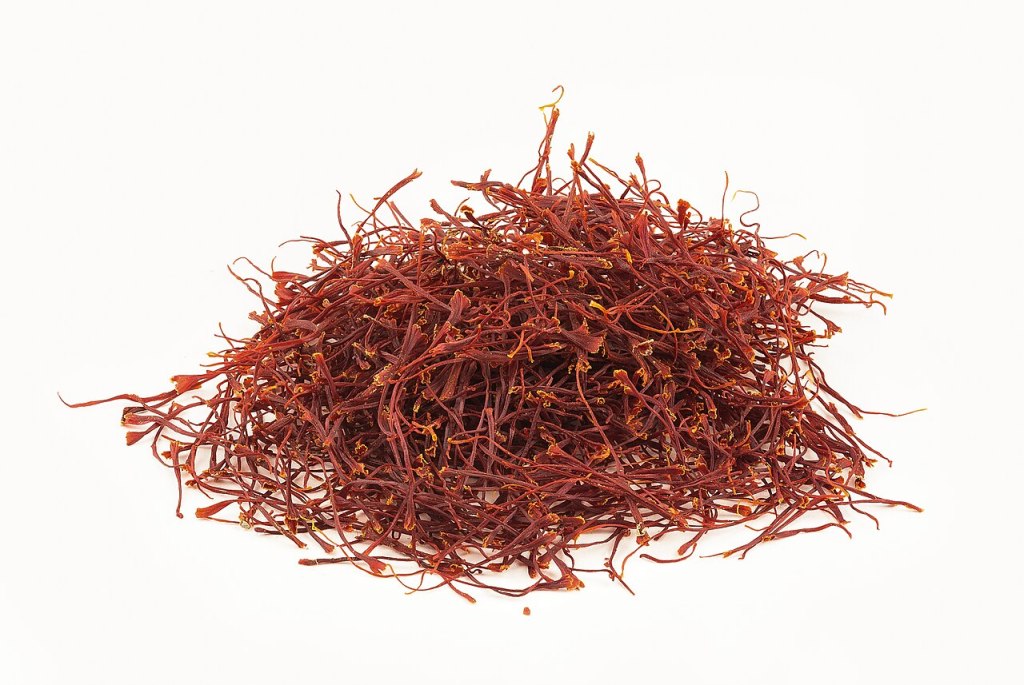
But before we dive any deeper, it’s important to note that saffron is derived from the saffron crocus itself. More specifically, the spice (saffron) consists of the reddish-orange threadlike structures of the flower called stigmas. Crocus sativus is actually the only Crocus species that yields saffron.

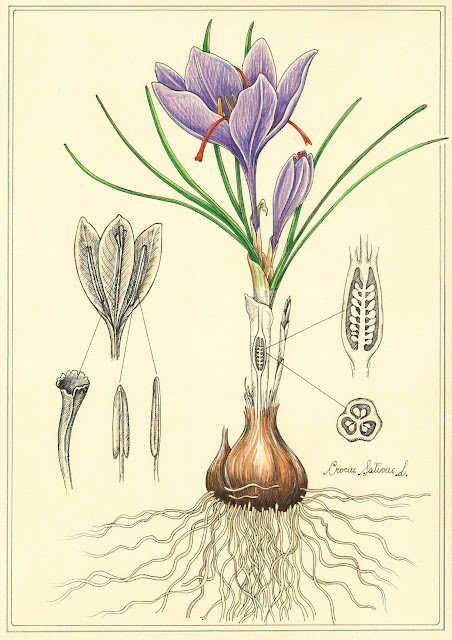
Illustration of Crocus sativus

The saffron crocus is related to the iris and is considered an autumn-blooming crocus (late September to early October). It is also characterized as a cormous perennial, meaning that it grows from a tuber/bulb like a tulip and returns year after year.

Crocus sativus can grow to be 30 centimeters high. As mentioned, it develops as a bulb underground which in turn produces leaves, bracts, bracteole, and the flowering stalk. Its blooms tend to be a deep purple and have six petals and three stigmas. Its leaves are rosulate (arranged in the form of a rosette; a cluster of grasslike leaves radiating from a central point).

With the flower only producing three stigmas, it’s safe to say it takes a large volume of flowers to yield a small amount of saffron (we’re talking up to 75,000 individual plants in order to produce one pound of saffron), thus making it the most valuable spice of the ancient and modern worlds. Harvesting was indeed labor-intensive but also ritualistic to the Minoans. In fact, it continues to be culturally significant in Greece, with non-mechanical saffron cultivation remaining a tradition throughout the country, especially in Crete.

The medicinal component of saffron stems from its concentration of potent carotenoids (antioxidants crocin and crocetin).

Saffron dye is vibrant yellow to orange. It is water-soluble with a high tinctorial strength, meaning its vivid color in small amounts goes a long way. This striking color comes from the carotenoid compound crocin, which makes it particularly resilient to sunlight.

In addition to frescoes, ceramics and makeup, the dye has been used in fabrics, and signified prestige and elegance.

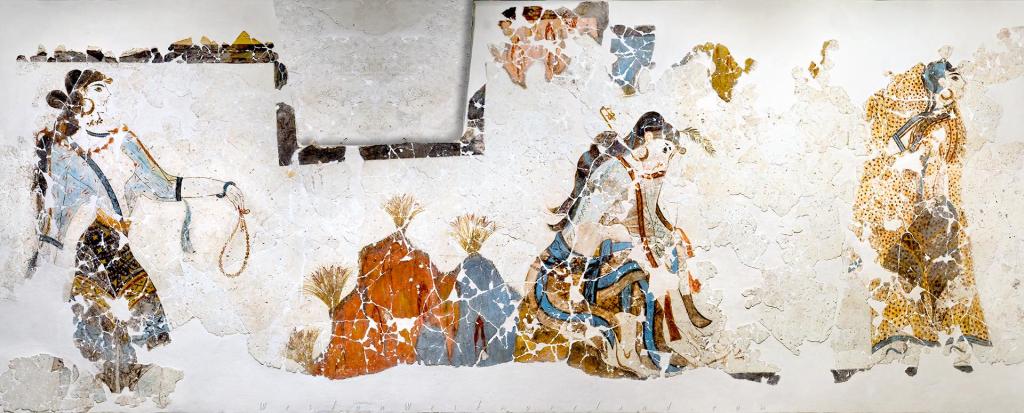
"Adorants Fresco" of three women of various ages adorned in saffron

Saffron served as a cornstone of culture and identity for Minoan women in particular. In virtually every scene of saffron crocuses, solely women have been depicted. This leads scholars to posit that saffron was a gynecological remedy (among others) that was used by midwives and female healers alike. One such scene is featured in the “Adorants Fresco” (see above) that originally adorned the walls surrounding a ceremonial basin. Along the north wall, three women are shown headed toward a shrine on the east wall. Crocuses and saffron stigmas make appearances on the vibrant garments of all three: the older woman to the left walking towards the shrine wears a blue blouse decorated with crocus flowers and a garland of crocus stigmas around her neck and shoulders, the seated woman in the middle wears a belt embellished with crocus flowers as she nurses her wounded foot, and the youngest person on the right wears a yellow veil speckled with red and a crocus-adorned bodice. Beyond its medicinal properties, this scene also displays an initiatory rite from girlhood to womanhood.

The intersection between saffron and divinity can be seen in an early-20th-century discovery by Arthur Evans at Knossos. As the Temple Repositories were revealed, an array of ritualistic faience objects were discovered. Amongst them were faience crocuses that served as votive offerings and models of crocus-adorned garments.

The versatility of the saffron crocus cannot be emphasized enough. This multi-functional crop was valuable in all avenues of Minoan life, from economical to religious. Millennia later, and it is still one of the most sought-after spices known for its subtly sweet and earthy flavor with floral notes.

a clump of saffron threads

A Mystifying Minoan Monument Recently Discovered in Crete

In June 2024, on Papoura Hill in Kastelli, Heraklion, Crete, an ancient monument was discovered that has both mystified archaeologists and offset the plans for a new airport. As with so many discoveries related to Minoan civilization, the purpose of this expansize maze-like structure is unknown.

However, here is what’s presently known:
🔸 It stems from the Protopalatial period (2000-1700 BCE – based on the style of pottery fragments found nearby).
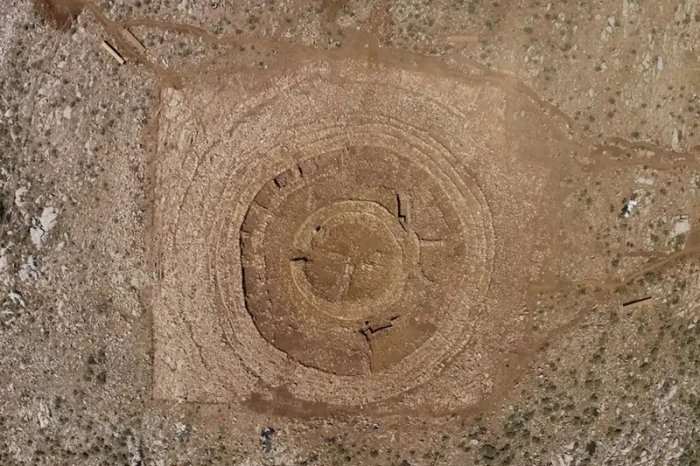
🔸 It was built utilizing eight 1.4-meter-thick stone rings.
🔸 It spans 157 feet in diameter.

Surprisingly, parts of it are still well-preserved.

An aerial view of the circular structure. Credit: The Greek Ministry of Culture

According to The Greek Ministry of Culture, some of its features are notably similar to Minoan tombs and Hellenic mounds due to the intricate, circular stone-ring arrangement. What’s undermining this specific  speculation is the vast number of ancient animal bones that have been uncovered. That finding, along with its location (an area of elevation), potentially points to a monument with a ritualistic purpose (offerings, sacrifices, feasts, etc.).

While these speculations seem sound, the construction plan itself did not share many similarities to other Cretan buildings of the same time period. Instead, it more closely resembled constructions from West Asia in the brink of the Bronze Age (i.e. the elliptical Middle Minoan building of Hamaizius and a circular proto-Hellenic cyclopean building of Tiryns).

In addition to this labyrinthine structure, excavations have unearthed over 30 other archaeological sites throughout the area. A new airport has already been in-progress, but now that such amazing archaeological findings have been unveiled, a balance between modernization and maintaining cultural heritage must be maintained. In fact, when discussed, it was concluded that the latter is to be continually prioritized.

In general, The Greek Ministry of Culture is devoted to protecting ancient sites from modern development to safeguard the continuation of research and the conservation of history. This recent discovery, among dozens of others, gives deeper insight into a rich culture that still mystifies researchers to this day.

Smithsonian Magazine: Discovery of 4,000-Year-Old Structure in Greece Stumps Archaeologists
Live Science: Mysterious 4,000-year-old ‘Palace’ with Maze-like Walls Found on Greek Island of Crete
Hellenic Republic Ministry of Culture: ΥΠΠΟ: Εύρημα μοναδικό για τη μινωϊκή αρχαιολογία