
a Minoan-inspired poetic story about how The Lily Prince got his name
Soon after he took his initial steps,
his heart was drawn to the coast at sunset
bedecked with rosen cumulus clouds.
The seagulls’1 elegiac yeows
set to the Aegean’s sonorous symphony—
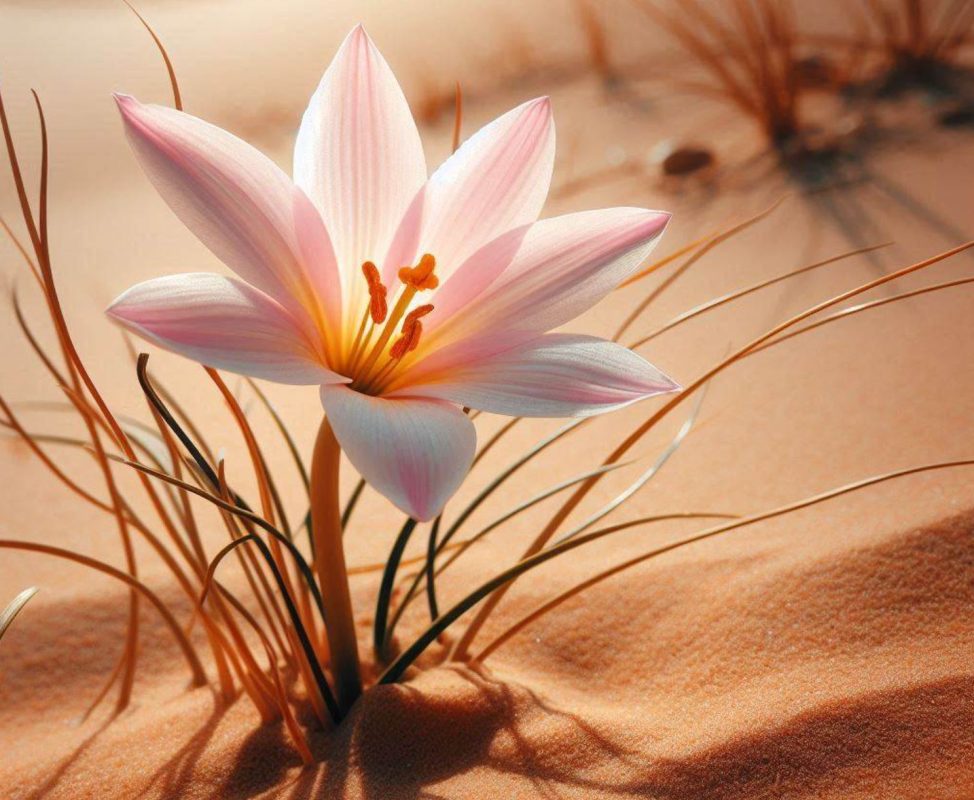
all served as an invitation from the sand lilies2.

So, the young wide-eyed prince wandered off
every opportune moment he got
to inhale the warm salted air
sweetened by the flowers’ subtle flair.
But it wasn’t long before his mother caught up
and urged him to return with her to the palace at once.
And he would oblige, for he was the Wanax’s3 son,
but not before he picked her the most vibrant one.
P.S. You’ll be seeing quite a bit of Minoan-inspired poems from me this month because it’s National Poetry Month/NaPoWriMo. 😀
- Seabirds of the genus Larus were likely present in ancient Crete. ↩︎
- Also known as a sea daffodil or sea lily (Pancratium maritimum), the sand lily is native to Crete and has been around since prehistoric times, with the Minoans depicting it in their art. ↩︎
- “king” in Mycenaean Greek (pronounced as wa-na-ka in Linear B). While not directly associated with Minoan rulers, there is evidence of kings in Minoan Crete, but there is no known word for them. ↩︎


 Minoan Magissa