Η χέρα μου βαμμένη βαθυκίτρινη σαν ήλιο. Χρυσοχέρα με φωνάζουν στην Θήρα και στην Κνωσό.
Τα μαλλιά μου πάντα θα μοσχοβολάνε σαν τη γη. Θα μαζεύω σαφράν μέχρι την τελική μου πνοή.
Transliteration:
I héra mou vamméni vathykítrini san ílio. Hrysohéra me fonázoun stin Thíra kai stin Knosó.
Ta malliá mou pánta tha moschovoláne san ti gi. Tha mazévo safrán méhri tin telikí mou pnoí.
English Translation:
Μy hand, like the sun, is tinted yellow. Golden-handed they call me in Knosso.
My tresses will always smell like the earth. I’ll gather saffron ’til, with it, I merge.
Note: This Cretan folk poem is inspired by Minoan saffron gatherer frescoes. I’d imagine something as time-consuming as saffron gathering would make it so a saffron gatherer’s fingers were continually tinted deep yellow. There is a level of precision and dexterity that is necessary due to the dainty and valuable nature of crocus stigmas, so I’d also like to think these gatherers were determined and patient people. Also, “χρυσοχέρα: hrysohéra” (golden-handed) is a common descriptor used amongst Greeks for someone who is good with their hands.
Today, I’m starting a series called Minoan Mantinada of the Month, where I’ll share a Minoan-inspired mantinada in both Greek and English at the start of each month (alliteration semi-intended). I’ll implement the Cretan Greek dialect at times, but because I’m fairly rusty, that won’t always be the case. I figure it’s a unique way to get a glimpse of Minoan life that unites the ancient and modern Cretan cultures.
A mantinada (μαντινάδα: “morning song”) is a Cretan-style folk poem that’s usually recited with the backing of a lyra or laouto. It’s comprised of a rhyming couplet with two 15-syllable lines. However, I’ll be writing the English translation in 10-syllable lines to avoid overly long lines. And it’s important to know that the meaning may vary a bit due to translation limitations while also needing to adhere to a rhyme.
An Aspiring Sailor’s Dream
Original Greek Version:
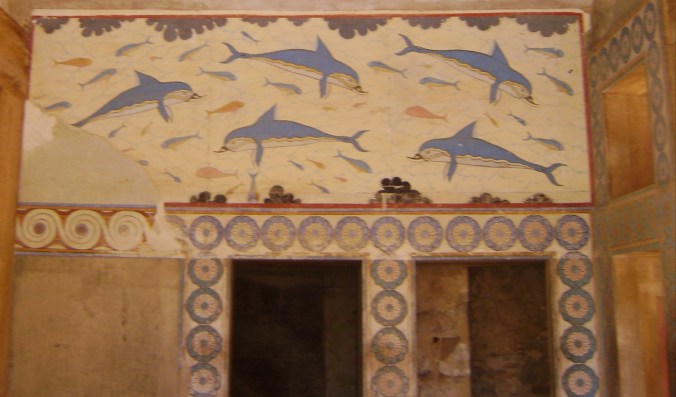
Δελφίνια με συνοδεύουν και ο Νότος ευλογεί το μοναδικό μου όνειρο από μικρό παιδί:
να σύρω τα δυό μου πόδια στις ακτές της Αιγύπτου αν η Θεά το επιτρέψει, όπως τον μπαμπά μου.
Transliteration:
Delfínia me synodévoun kai o Nótos evlogeí to monadikó mou óneiro apó mikró paidí:
na sýro ta dyó mou pódia stis aktés tis Aigýptou an i Theá to epitrépsei, ópos ton babá mou.
English Translation:
Dolphins escort me and Notos (south wind) decrees my one and only childhood reverie:
for these two soles to tread on Egypt’s sand, if Goddess wills it, just as my dad had.
Note: This Cretan folk poem is about a Minoan sailor’s first time at sea on his first trade expedition who always dreamed of what Egypt would be like. He is so eager that it feels like both the sea creatures and wind are conspiring for him (and hopefully the Goddess too). He is honored to walk in his father’s footsteps and feels closer to him as a result.
a piece about my unforgettable visit to the Palace of Knossos that connected me to my ancestors in a way nothing else has…
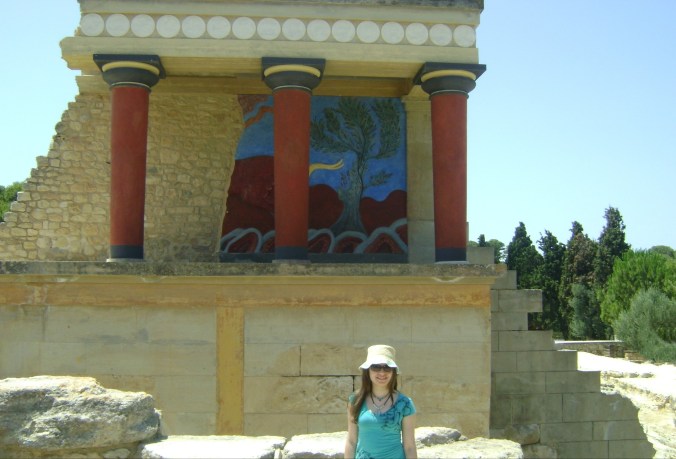
me by the Restored North Entrance with the Charging Bull Fresco
Mid-July sun scalds skin and ancient sites indiscriminately and illuminates the same steps my ancestors took thousands of years ago. The trickles of sweat down my brow are overshadowed by the tingle up and down my spine as I approach pithoi1 that once contained oil from olive trees that may still live to this day,2 vibrant frescoes that still echo the artistry of masterful Minoans despite destruction by both nature’s and occupiers’ hands and some questionable reconstructions, labyrinthine paths that, along with midday heat, further dizzy me.
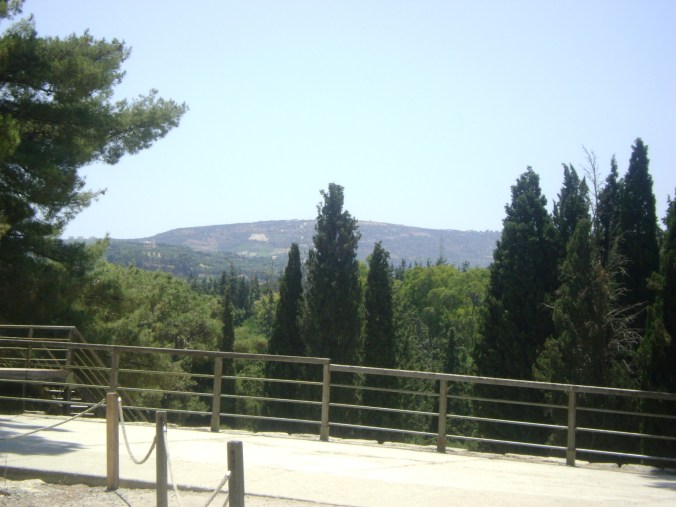
Mouth dry but mind bedazzled by Mount Juktas (Γιούχτας)3 nearby and Kephala Hill (Κεφάλα) upon which Knossos (Κνωσσός) was built that have seen it all since the dawn of their time, stone pines and cypress that envelop the sacred ruins and perfume the air with an earthy resinous aroma that graced festivals and rituals millennia ago.
Finding solace in the shade of a souvenir shop with the words “Knossos Antiquities” on the side and shrubbery along the top, I immediately decide on a golden figurine of the Snake Goddess with an owl atop her head, not a cat that Arthur Evans and Halvor Bagge proposed and transposed upon her crown. As the sun shines just right, I then catch a glimpse of a mini Lily Prince with a similar golden finish and know then and there: I just have to have it! Having promised my friends overseas that I’d send them post cards, I also select several that show Knossos in its most magnificent light.
Upon returning to grandma’s (γιαγιά) house, and after being well-fed, of course, a satisfying exhaustion takes over my body and I fall into a deep sleep, charging bulls, dolphins, and griffins infiltrating my dreams. The Lily Priest-King and The Snake Goddess themselves observe me from afar with knowing smiles but grave eyes as it starts raining rosettes. A sudden tidal wave hits the Palace, and a chilling darkness overcomes me. I wake in a cold sweat in the same blackness and fear I haven’t awakened at all4…
I may have left, but the magic of Knossos will never leave my heart and psyche, even if I never set foot there ever again6.
*More photos from my trip can be viewed here. Please pardon the blurriness in some – these were all taken with a relatively cheap digital camera back in 2011…






 Minoan Magissa