
The Symbol of Sanctity
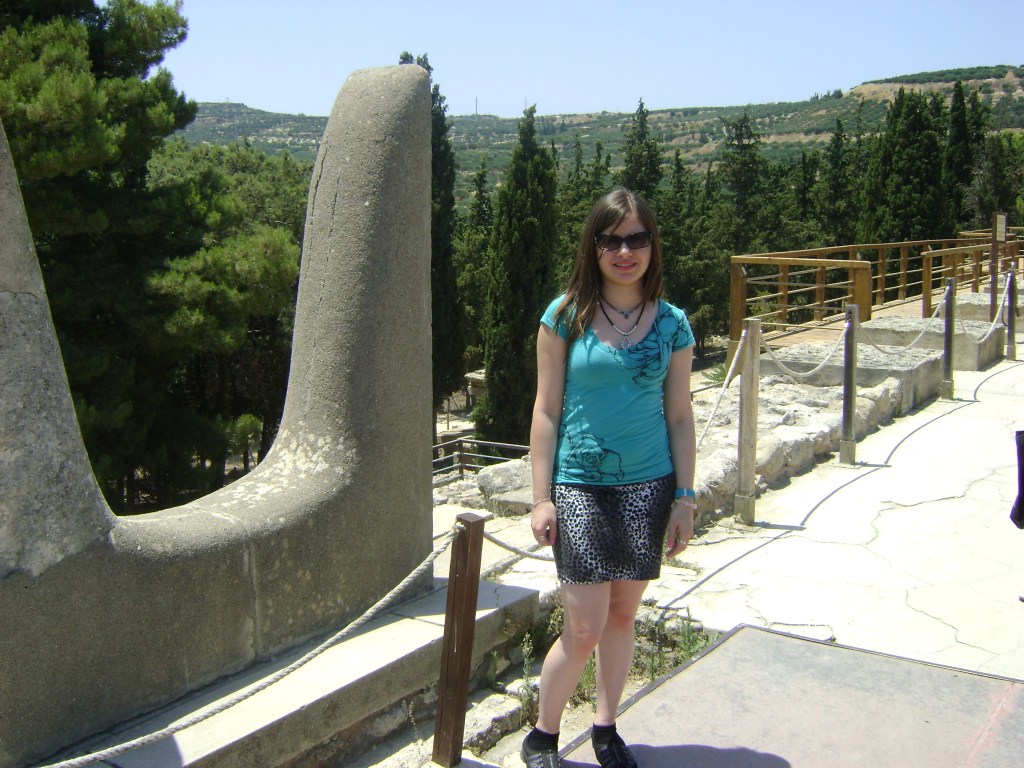
Sacred bull horns (made of limestone or clay) were one of the primary symbols in Minoan culture. They could be found on rooftops, tombs, larnakes (coffins), shrines, temple entrances, sealstones—you name it! In some instances, the horns were depicted with flowers or the labrys (butterfly axe) in between them. They were clearly a notable part of daily life as much as they were a part of mystical rituals, which is why archaeologist Arthur Evans coined them as such.

It has been suggested that the colossal horn sculptures atop buildings could have been used as frames for viewing stellar movement. However, one thing is for certain: these weren’t mere horns of a bull; they held religious significance—bulls in general were regarded as sacred animals to the Minoans and were integrated into most rituals.
Sacred Seat or Pot Holder… or Both?
Some scholars claim the larger Horns of Consecration served as honorary seats for royalty and/or deities. On the other hand, some scholars have had a more practical use in mind: perhaps the horns of lesser size were pot-support in a hearth. While a true consensus isn’t feasible, it would be safe to ascertain that these horns were in fact multi-functional.
The Bull Under The Sun
Another element of The Horns of Consecration are their potential solar quality (the sun was an equally important Minoan symbol). Many researchers like Emilia Banou (Faculty Member at University of the Peloponnese) propose that they are a sign of sun worship as posited in the following evidence:
- a clay model of it on the peak sanctuary of Petsophas
- astronomical research results from various other peak sanctuaries
- a Goddess with Upraised Arms (pictured in the first photo in the upper center) alongside a clay model of Horns of Consecration were found at the Mycenaean cemetery of Tanagra
With Egyptian influence of Minoan culture being undeniable, such religious notions relay back to Ancient Egyptian symbols of both mountain and horizon, which ultimately have a solar basis.
Sources
Academia: Horns of Consecration
BYU Library Digital Collections: Minoan Symbols
*Featured photo from Wikimedia Commons by Afrathianakis Emmanouil
*First photo from Wikimedia Commons by Rda
Discover more from Minoan Magissa
Subscribe to get the latest posts sent to your email.
 Minoan Magissa
Thank you for sharing this awesome post right here! 🙂 I’ve read about Crete during my junior high school English classes as we tackled Greek and Roman mythologies — how King Minos built the Labyrinth to hold the Minotaur, and how Theseus killed the half-human, half-bull creature.
I later read about how the island had a unique culture, as evidenced by the Knossos site. Looking forward to reading more!
(Also, thank you for following The Monching’s Guide! Couldn’t comment on your About section, so I hope you don’t mind if I leave this here.)
LikeLiked by 1 person
Thank you for reading and being my first commenter :)! Yes, that’s a very popular story in Greek mythology. Crete is definitely a unique island with a rich culture that spans many, many years. It’s amazing how intricate it is, and there’s still so much we don’t know!
And you’re welcome! I don’t mind at all; I notice the commenting feature gets a bit glitchy at times.
LikeLiked by 1 person
Pingback: Minoan Symbols: The Labrys (Butterfly Axe)🦋 | Minoan Magissa