How to Actually Dress Like a Minoan in the Modern Day

Unless you’re a tailor or good at sewing, replicating the exact look of a Minoan woman may not be impossible, but it would certainly pose a challenge. You can find some of my own budget-friendly renditions here. But there are ways to achieve the overall essence of this ancient Aegean look, which is what I’ll be diving into in this article. You may even already have some similar  items in your closet! And if you are an avid sewer unlike myself, then I highly recommend this amazing tutorial for both women’s and men’s Minoan outfits by Daisy Viktoria.
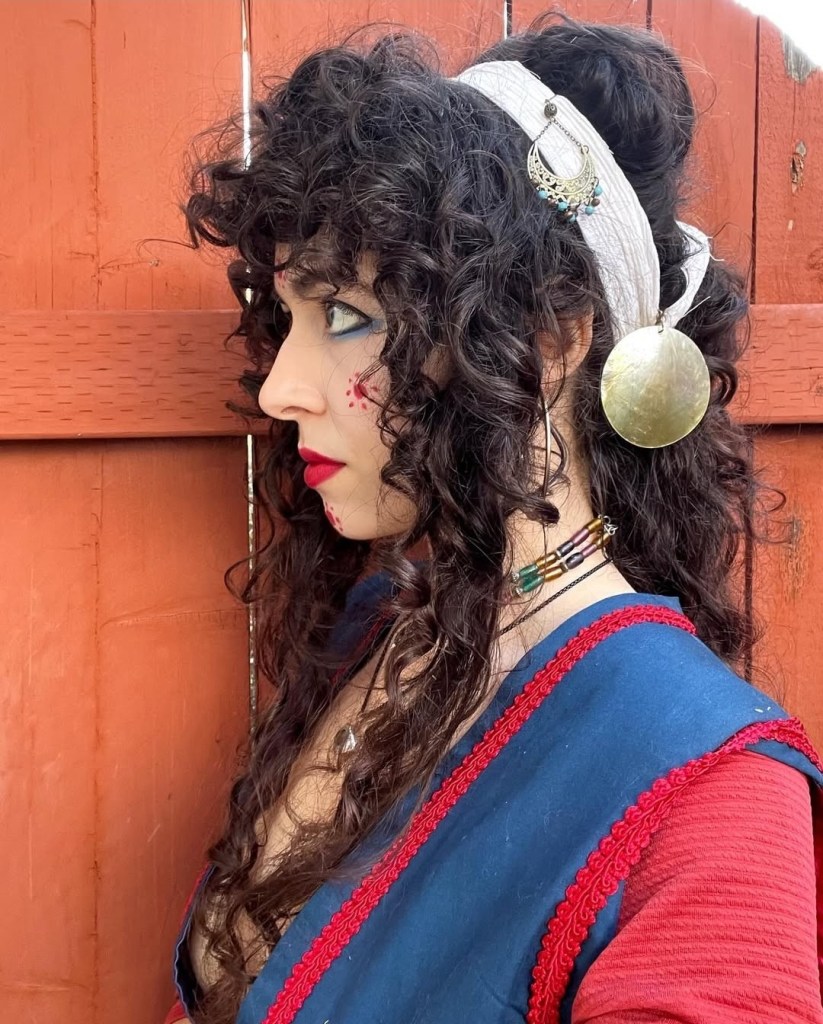
an impressive example of a Minoan/Mycenaean-inspired look by Greek cosplayer Persephonaae. She is waring a blue and red bodice and has long curly black hair
an impressive example of a Minoan/Mycenaean-inspired look by Greek cosplayer Persephonaae on IG

The biggest statement piece is the long flounced/pleated skirt. When looking for a long skirt, the main keywords would be maxi, tiered, layered, waterfall, ruffled, and multicolored.

tiered ruffle maxi skirts in black, red, and teal
While these options by Plus or Bust aren’t multicolored, they have the tiered ruffle appearance.
a patchwork skirt
a patchwork skirt by Ojas Kirti Creation can fit the bill, too!

For the upper garment, look for a cropped open-front bolero shrug. Half-sleeve is preferred, but long, short, or no sleeves work, too. 80s embroidered styles, especially (the third one was made in Greece):
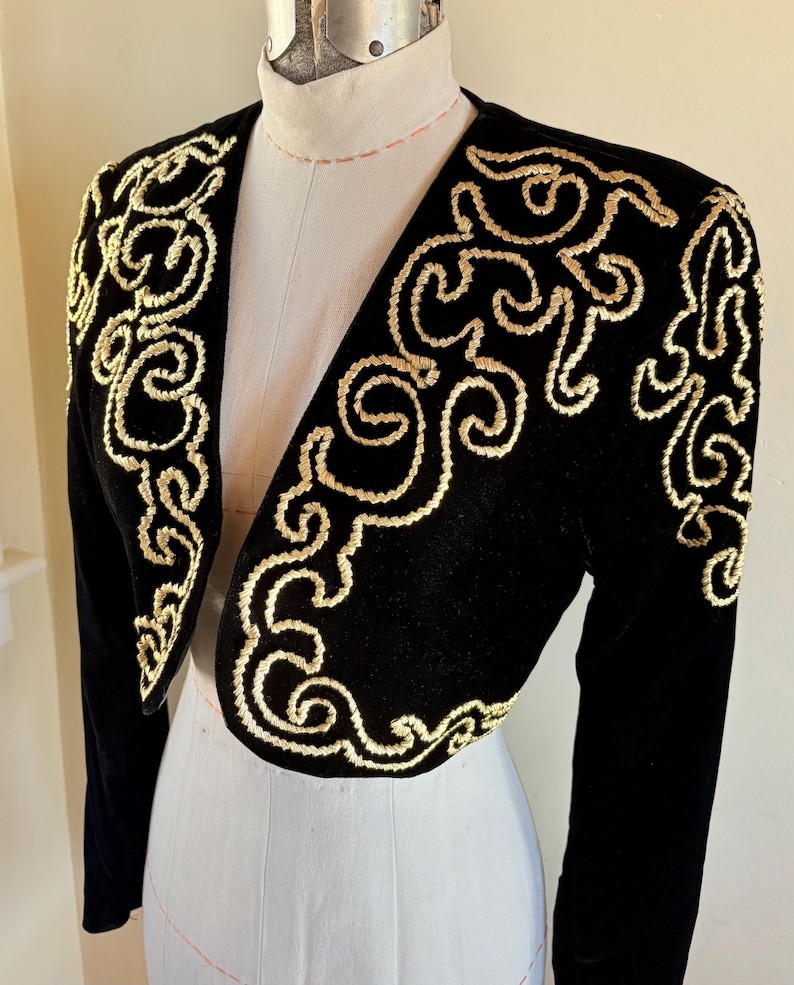
a black bolero shrug with white embroidery
Click here for the listing on Etsy
a dark pink bolero shrug with light blue floral embroidery
Click here for the listing on Etsy
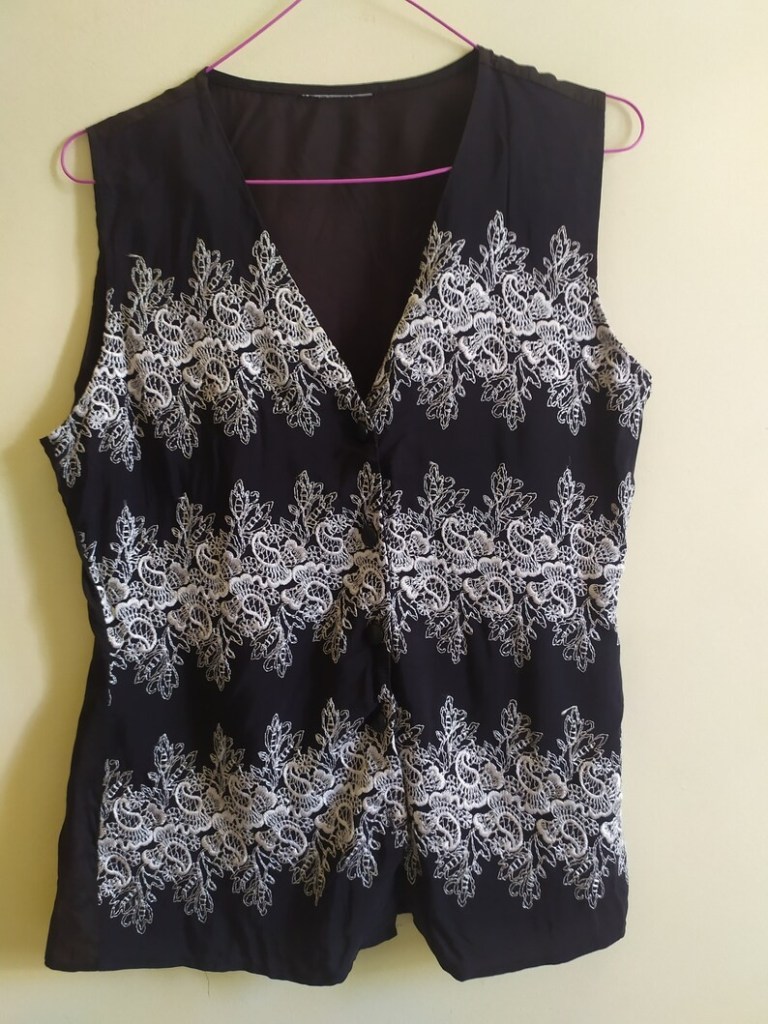
a back vest with white plantlike embroidery
Click here for the listing on Etsy

A suzani embroidered vest is a great alternative as well:

a teal suzani vest with floral design
Click here for the listing on Etsy (suzani originate from Central Asia – there was so much cultural exchange back in those times, so I’m not at all surprised that there are clear similarities in traditional clothing)

For shoes, try Greek-style strappy sandals with no heel, or you can go barefoot:
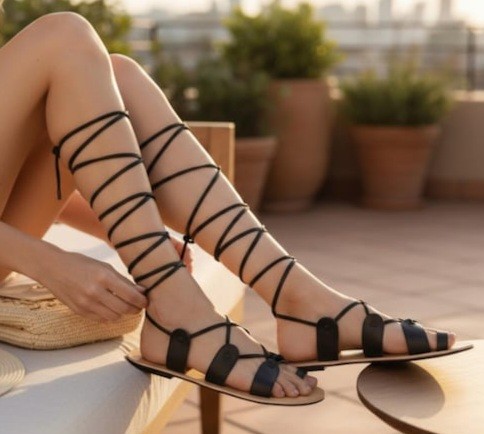
strappy black sandles that wrap around the calves
the Terpsichore sandal by Mac&Lou
  • thick black cat-eye eyeliner
  • red lipstick
  • black eyebrow pencil for a more striking look
  • that same red lipstick can also be used to draw matching little suns on your cheeks, chin, and forehead (more Mycenaean than Minoan but still captures the Minoan vibe quite well – Mycenaean fashion was also deeply influenced by Minoan styles). I saw a reel by public historian Han Parker where she colored the top of her lipstick cap with lipstick and stamped it on her face (so clever but maybe a little too big for my liking). She then used a fine makeup brush (or you can use a cotton swab) to fine-tune it and add the smaller circles around it.
Persephonaae again, but this time, you see the sun blush on her face and eyeliner better
The stunning details of Persephonaae’s makeup
  • golden bangles
  • golden arm cuffs
  • colorful beaded chokers
  • long tassels to tie around the waist
  • Minoan-inspired pendants and dangling earrings
golden bangles featuring the Phaistos disc and Greek meander/key design by Handmade Soulmates
a golden snake arm cuff/bangle by Jewels Sandra
a golden Malia Bee Pendant replica with earrings
a Malia Bee Pendant replica by Ilios Shop with matching earrings, which I have
  • partial updo
  • curled or wavy long dark hair with lots of volume (you can wear a black wig if necessary)
  • curled strands, especially along the front
  • thick headbands
  • a string of pearls or beads

To find out more about Minoan women’s fashion, read this.

Minoan Mantinada of the Month / Μινωική Μαντινάδα του Μήνα #6: Minoan Winter

Original Greek Version

Άσπρα σαν τα σύννεφα ειν’τα βουνά εκιά πέρα.
Βροχή και καταβατικοί άνεμοι κάθε μέρα!

Δόξα την Θεά που η συγκομιδή ήταν άφθονη,
η ζεστασιά στα παλάτια και σπίτια μας μπόλικη.

Transliteration

Áspra san ta sýnnefa ein’ta vouná ekiá péra.
Vrohí kai katavatikoí ánemoi káthe méra!

Dóxa tin Theá pou i synkomidí ítan áfthoni,
i zestasiá sta palátia kai spítia mas bóliki.

English Version

The mountains in the distance, white like clouds.
Rain and katabatic winds all around!

Thank Goddess the harvest was bountiful!
The warmth in our palaces, plentiful.

Mount Ida during winter

Note: Similar to Modern Crete, Ancient Crete had short, mild winters (though winters on the the north end were a little harsher). To keep warm, they utilized centralized heating systems in their palaces and elite homes and implemented bioclimatic architectural designs. Besides that, simple fires, heavier clothing, and communal living spaces were commonplace. Katabatic winds are winds that blow down a slope, which are caused by gravity pulling dense, cold air downhill.

Minoan Mantinada of the Month / Μινωική Μαντινάδα του Μήνα #4: Minoan Autumn

Original Greek Version

Η συγκομιδή ελιών και σταφυλιών ξεκίνησε!
Kόκκινο χρώμα από τα δέντρα εμφανίζεται.

Η καλοκαιρινές ακτίνες του Ήλιου δροσίζουν.
Στο πολύχρωμο τοπίο, oι δρόμοι ησυχάζουν.

Transliteration

I synkomidí elión kai stafylión xekínise!
Kókkino chróma apó ta déntra emfanízetai!

I kalokairinés aktínes tou Íliou drosízoun.
Sto polýhromo topío, oi drómoi isyházoun.

English Version

The olive and grape harvest has arrived!
Auburn hues of oaks and planes come alive!

Summer sun softens, gives way to brisk days.
Bustling streets halt in the changing landscape.

Literal Translation (sans proper syllable count)

The harvest of the olives and grapes has commenced!
Red color from the trees appears!

The summer rays of the Sun are cooling.
In the colorful landscape, the streets calm down.

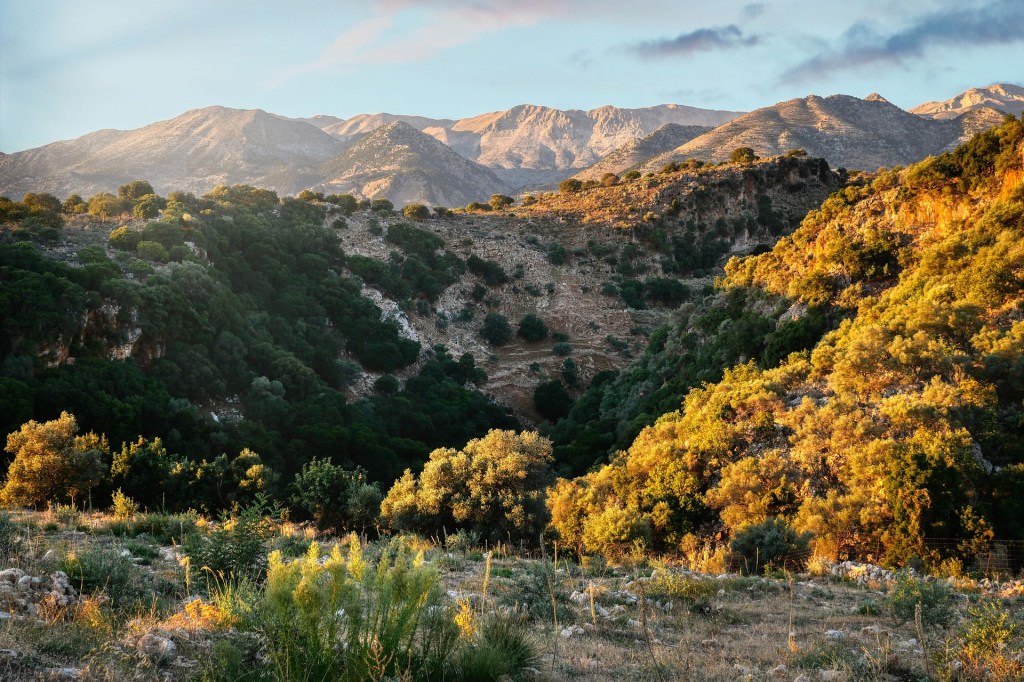
Crete mountain in fall by fietzfotos

Note: While there’s a lack of records, modern trends of Cretan weather can inform the distant past. Autumn was and is a time for harvesting the island’s greatest commodities: olives and grapes. Wine was also made at this time. As the plane (platanos) and oak trees took on striking brownish-red and golden hues (but the deep green of cypress and olive trees remained), the Minoans, like present-day Cretans, prepared for the winter ahead. The seasonal shift definitely brought much reprieve on an island known for its summers of harsh heat and VERY dismal rain (if any).