a Minoan-inspired poetic story about how The Lily Prince got his name
Soon after he took his initial steps, his heart was drawn to the coast at sunset bedecked with rosen cumulus clouds. The seagulls’1 elegiac yeows set to the Aegean’s sonorous symphony— all served as an invitation from the sand lilies2.
So, the young wide-eyed prince wandered off every opportune moment he got to inhale the warm salted air sweetened by the flowers’ subtle flair.
But it wasn’t long before his mother caught up and urged him to return with her to the palace at once. And he would oblige, for he was the Wanax’s3 son, but not before he picked her the most vibrant one.
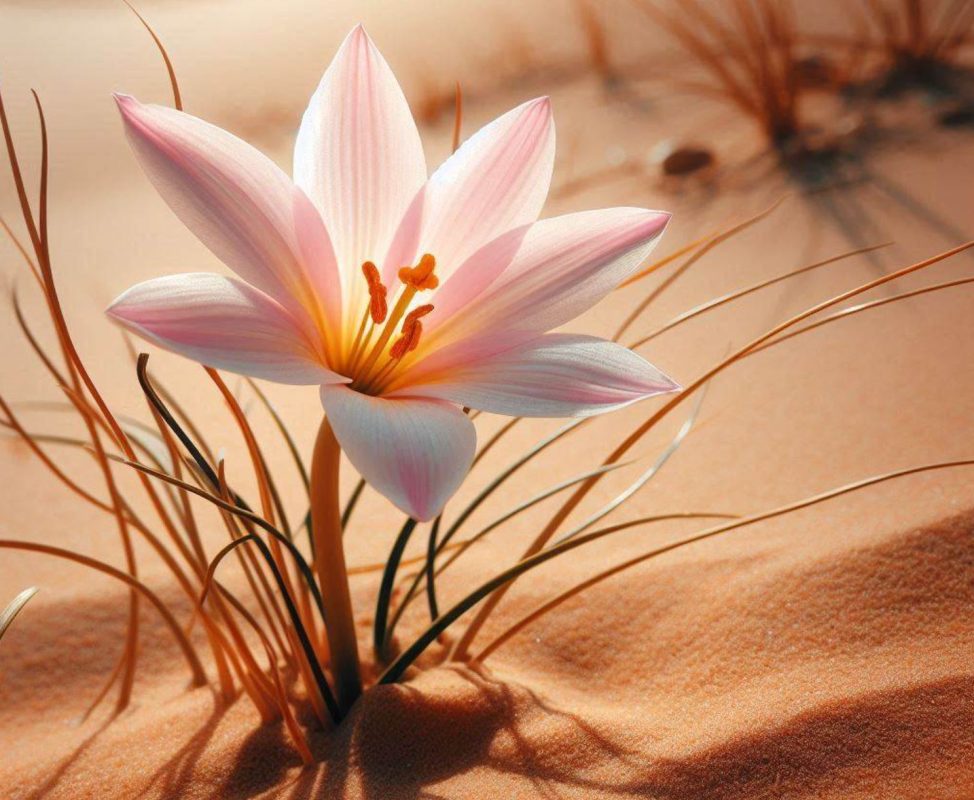
Cretan sand lily from Wikimedia Commons
P.S. You’ll be seeing quite a bit of Minoan-inspired poems from me this month because it’s National Poetry Month/NaPoWriMo. 😀
Seabirds of the genus Larus were likely present in ancient Crete. ↩︎
Also known as a sea daffodil or sea lily (Pancratium maritimum), the sand lily is native to Crete and has been around since prehistoric times, with the Minoans depicting it in their art. ↩︎
“king” in Mycenaean Greek (pronounced as wa-na-ka in Linear B). While not directly associated with Minoan rulers, there is evidence of kings in Minoan Crete, but there is no known word for them. ↩︎
I put together this playlist to teleport others to the time period of the Minoans. While we can’t know for sure what their music was like, I appreciate all these inspired compositions with some Ancient Greek flair. One musician even crafted a Minoan instrument that was depicted in a fresco (see featured image), and he tested his creation, which honestly sounds amazing! This playlist works well for fellow mystics who do ritualwork and folks with Greek and especially Cretan ancestry who would like to feel more of a connection to their ancestors.
That final track is more on the humorous side, but I appreciate its cleverness and (mostly) historical accuracy. 🙂
*I added a collaboration function in case anyone comes across any Minoan-inspired songs I may have missed. Go here to add a video.
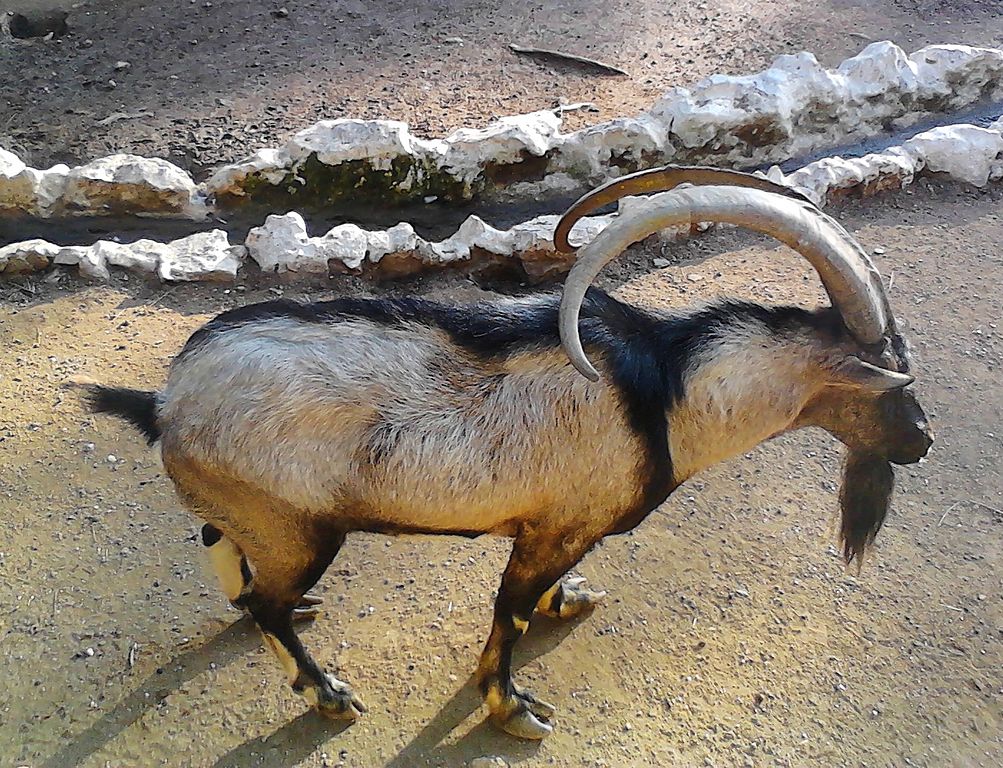
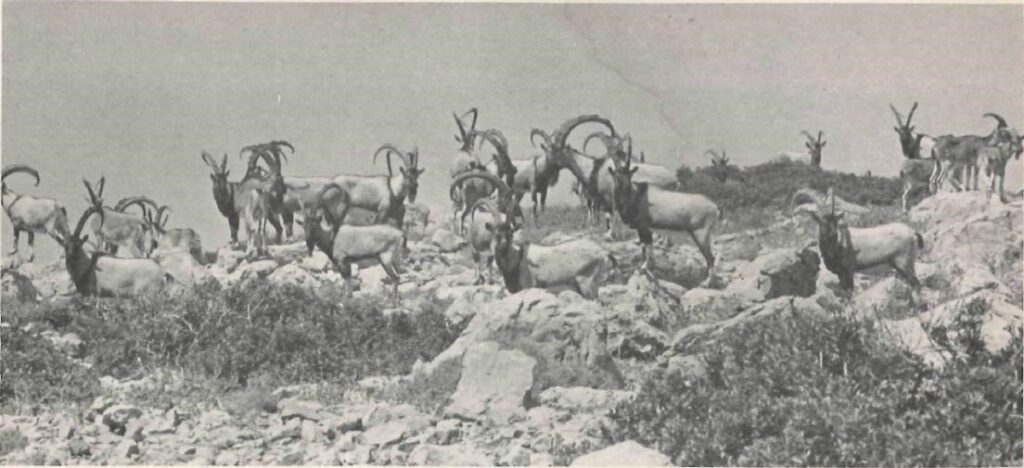
The Cretan goat (or kri-kri) is a creature of Minoan times that is still in existence to this day. It’s considered a feral goat endemic to Crete that also happens to be the island’s main symbol. This particular goat is commonly referred to as an agrmi (αγρίμι: “the wild one”, wild beast” or “full of fury”) amongst Cretans. Its female counterpart is called a sanada (σανάδα).
Credit: Ανώνυμος Βικιπαιδιστής
Key Traits of the Cretan Goat
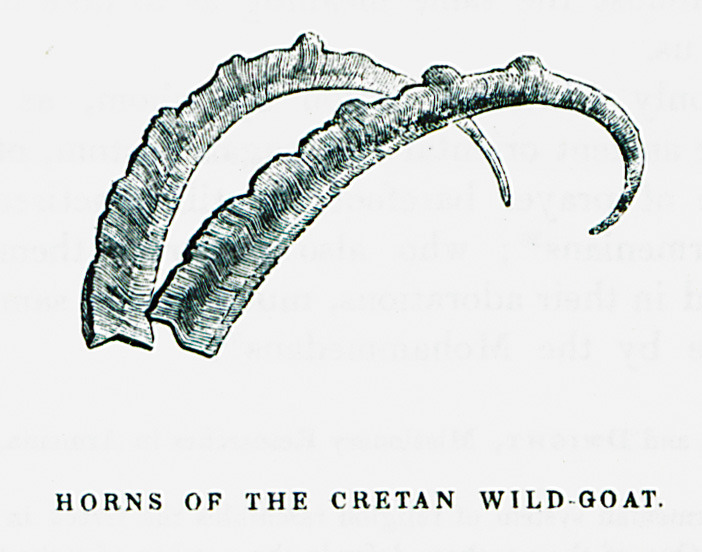
The kri-kri’s coat is coarse and light brown, with a black band around the neck on males. Moreover, it’s a double coat, consisting of an outer layer of longer, coarser hair (guard hair) and a soft undercoat (underwool). Their two horns that curve back are noticeably longer on agrimia than sanades. As for their extra-long hooves, they are cloven, which means that they’re split into two main hooves that work independently of one another. It also has two dewclaw hooves higher up its pastern (ankle), which are ideal for climbing cliffs and landing their large leaps without falling.
Out in the wild, the Cretan goat possesses a timid demeanor and avoids humans whenever possible but when cornered or taunted, they may respond by lowering their heads, pulling in their chins, and showing their horns.
Credit: Robert Pashley
The Agrimi’s Origins
The agrimi was most likely imported to the island during the Minoan period. Molecular analyses also demonstrate that this goat is not considered a distinct subspecies of wild goat as formerly posited. It is, in fact, a feral-domestic goat obtained from the initial stocks of goats domesticated in the Levant and various parts of the Eastern Mediterranean in approximately 8,000 BCE.
A Protected Species That’s Still Under Threat
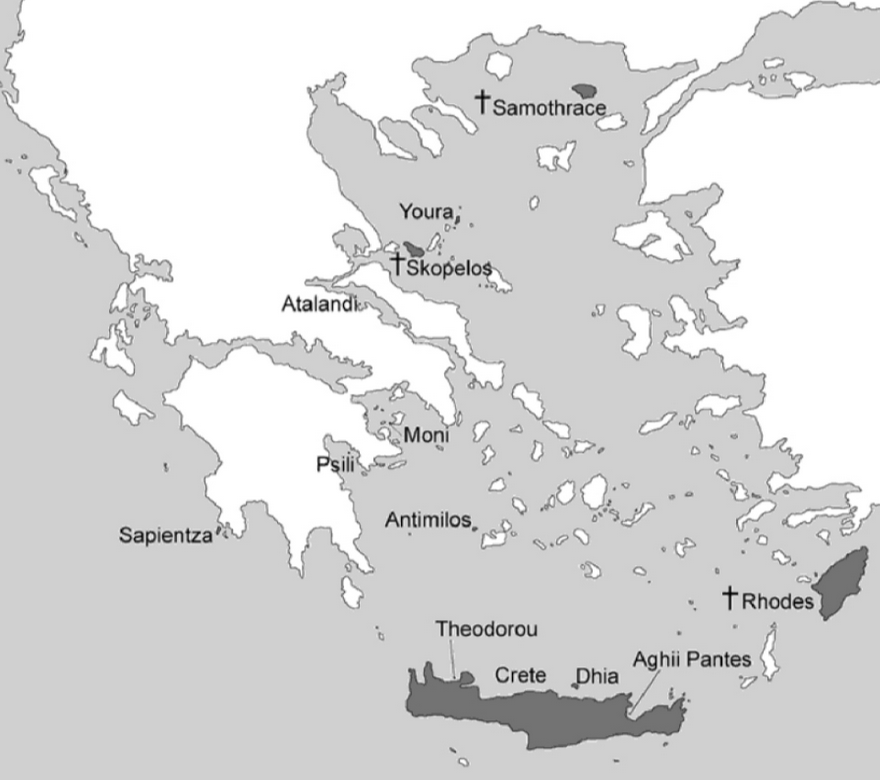
Credit: Marco Masseti
Capra hircus cretica was once common throughout the Aegean but the peaks of the White Mountains of Western Crete are presently where its most prevalent. This area hosts over a dozen endemic species and is protected by UNESCO’s (United Nations Educational, Scientific and Cultural Organization) Biosphere Reserve in Samaria Gorge. Agrimia also extend into the Samaria National Forest and the isles of Dia, Thodorou, and Agioi Pandes. To grow their numbers, they’ve recently been introduced onto two additional islands.
Despite all these efforts, the kri-kri is deemed “Near Threatened” globally by the IUCN (International Union for Conservation of Nature) as of 2025 due to habitat loss, hybridization with domestic goats, and poaching.
Back in 1960, this emblematic animal was at its most threatened, with a population just over 100. The main reason for this is that it had been the only meat source available to freedom fighters during World War II’s German occupation. Thankfully, Samaria Gorge became a national park two years later!
A Sacred Symbol
Not only is the kri-kri a primary symbol to modern-day Cretans, but it was also sacred in antiquity. Many depictions have been found by archaeologists in Minoan art, including the Minoan rhyton (drinking vessel) pictured above. This has caused some academics to surmise that the Cretan goat was worshiped and had ties to the Greek god Pan, the half-goat deity who presided over the wild, shepherds, and flocks.
Today, the agrimi represents the free spirit, grit, and determination of the Cretan people. It also embodies the island’s rugged landscape and the perseverance necessary to traverse it. I didn’t understand the reference at the time, but I’d be compared to an agrimi as a kid when I’d be outside playing with my friends all day long, paying no mind to skinned knees, sweaty clothes, and dirt on my hands and legs. “The Wild One”… Quite fitting indeed.
Sources
Bar-Gal, G. K. et al.: Genetic evidence for the origin of the agrimi goat (Capra aegagrus cretica). Journal of Zoology.



 Minoan Magissa